


Before the television spectacle of modern Egyptian squash. Before the sport’s centre of gravity tilted permanently towards Cairo.
There was the desert. And there was Ahmed Barada.
In 1996, the Al-Ahram International at the Pyramids of Giza changed the image of squash forever. A Perspex court stood improbably beneath one of the Seven Wonders of the Ancient World, floodlit against the Cairo night as thousands of Egyptians roared for their new sporting hero.

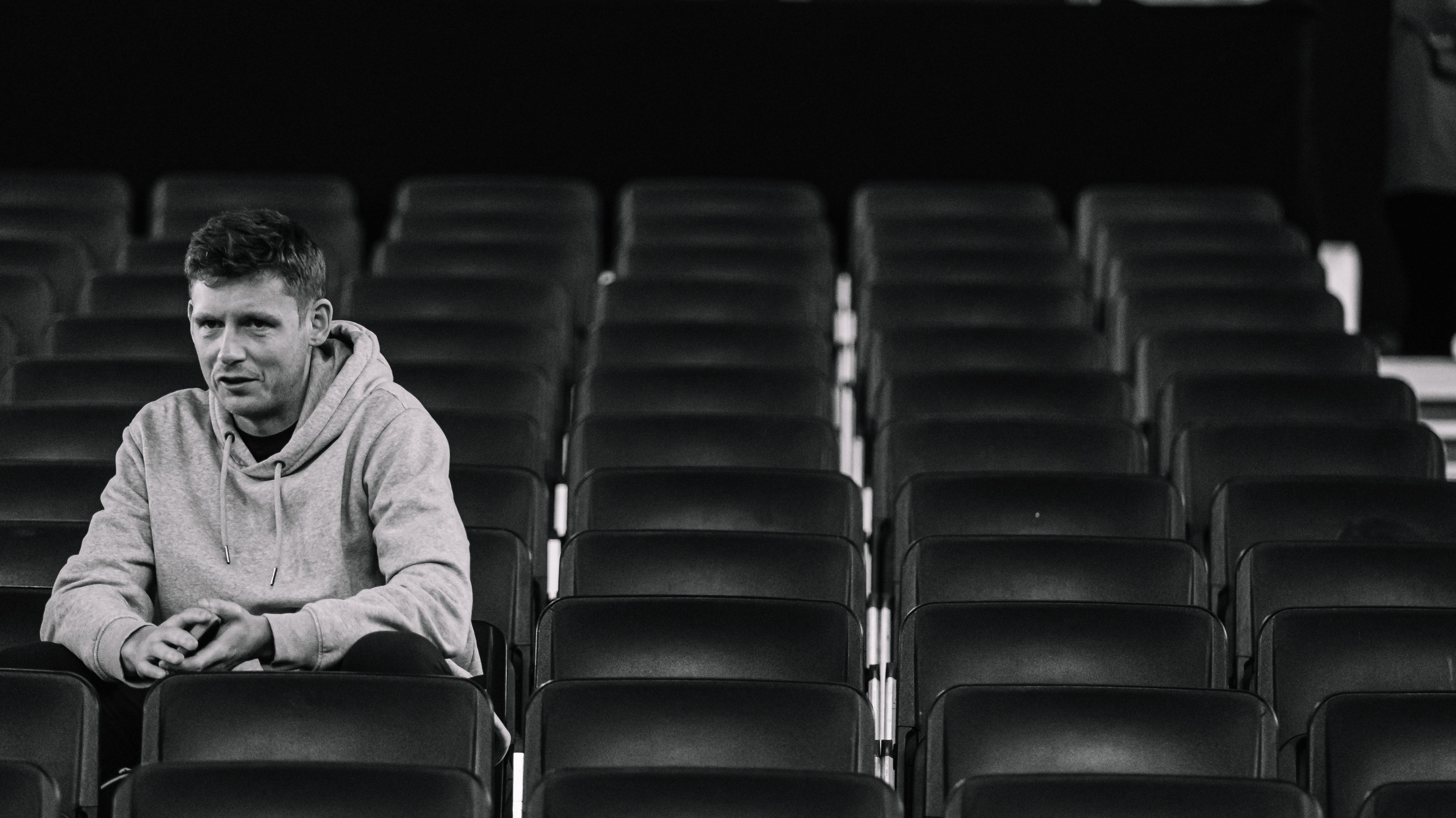
For former World No.3 Paul Johnson, who played in those early years of the event - including the debut event of 1996 - it remains one of the most surreal experiences of his career.
“It was absolutely iconic playing there,” Johnson recalls.
"They put the perspex court up there in front of the great pyramids and the setting, as everyone now know, was just incredible. It was amazing.
"But from a player's perspective it was an absolute disaster. You’re obviously in the middle of the desert. The heat during the day was extreme then as soon as the sun went down, it got drastically cold.”
The conditions bordered on absurd. Players wrapped themselves in layers between matches trying to stay warm. Wind whipped through the open arena. Sand drifted onto the court during rallies. Practice time during the day was almost impossible.
And then there was the crowd. Back then, Johnson says, this was something different: raw passion, football energy transplanted onto a squash court.
At the centre of it all stood Barada: charismatic, combustible, magnetic.
“They used to bus fans out from Cairo,” he says. “Two-and-a-half thousand, three thousand spectators came to watch Barada play."
Johnson still remembers walking onto court for a semi-final against Barada as Robert Edwards, the MC, attempted to introduce the players over the noise.
“Ladies and gentlemen, please welcome from England, Paul Johnson…” he says, laughing. “There were maybe two or three people clapping.”
Then came Barada’s entrance.
“The lights go down, the build-up starts… and honestly, if there’d been a roof on the place it would have come off.”
What happened next has since become part of squash folklore.
“All of a sudden I heard this massive thud,” Johnson says. “I looked down and there was this lizard - literally about 12 inches long - wriggling around on its back in the middle of the court.
"Somebody from the crowd had thrown a lizard at me on the court!
“One of the court cleaners had to come on and get rid of it because I wasn’t touching it,” he laughs.
The story is absurd. But it also captures something essential about that era: the chaos, the theatre, the sense that squash had suddenly escaped the polite confines of private clubs and wandered into something far louder and more dangerous.
Johnson believes the pressure on Barada himself was enormous.

Long before Egypt became squash’s dominant superpower, Barada was its first modern icon - a player who transcended the sport itself. Johnson had seen it coming years earlier.
“From a very, very early stage you could tell there was something special about Barada,” he says.
But sharing a court with him, particularly in Egypt, was another matter entirely.
“As a fellow professional, I wouldn’t go as far as to call Barada a cheat,” Johnson says carefully. “But he would push boundaries.”
Blocking. Trailing legs. Picking up dubious balls. Gamesmanship layered onto talent and amplified by the pressure of an entire nation willing him to win.
“It was a win-at-all-cost mentality from him,” Johnson says.
And nowhere was that atmosphere more intense than at the Pyramids.
“Egypt hadn’t really had much to shout about sport-wise,” he says. “Then all of a sudden along comes this young talent and the entire nation got behind him.
“When he went on to win the Al-Ahram tournament in 98, he became a megastar,” Johnson says.
“TV shows, radio shows… hundreds of kids lining up for autographs.”
Barada’s rise transformed Egyptian squash culturally and commercially. Clubs competed for players. Appearance fees exploded. A pathway emerged.
“After him you had Karim Darwish, Shabana, Ramy…” Johnson says. “It all came off the back of Barada’s initial impact.”
Nearly three decades later, Egypt dominates professional squash so completely it can feel inevitable.
But Johnson remembers when it wasn’t. He remembers the desert wind. The orchestrated crowds. The feeling of being swallowed by noise beneath the Pyramids.
And somewhere in the middle of it all, a lizard spinning helplessly across the floor of a Perspex squash court.