



West Wood, a chain of luxury fitness clubs in Dublin, is to open a seven-court squash centre with an all-glass court equipped to host major tournaments.
Subject to planning permission, the construction of the €1.5million squash centre at the West Wood Club in Leopardstown will be part of a ‘Racquets Centre of excellence which also includes two new domes for tennis, padel and pickleball.
The new squash centre will feature three glassback courts opposite each other with a communal social area in between and an all-glass court at the end with retractable seating behind the back wall.
“I would love one day to have the European Teams or the World Championships here, because we are absolutely set up for that,” West Wood’s Racquets Sports Manager, Ed Dunne, tells Squash Player.
“We’re 30 minutes from the airport, right next to the M50 motorway and a tram stop and there are three or four hotels right beside the club. The club is so big you could easily have two or three hundred people descend on it and the members wouldn’t even notice.
“There are changing facilities, jacuzis, sauna, gym and much more. It’s a luxurious club, so the players will have all the warm-up and warm-down facilities they need.”


West Wood’s Leopardstown club already has three squash courts which are used regularly by around 300 members. Since Covid, the club as a whole has gone from 7,500 to 12,000 members, and management want to repurpose the squash courts in order to extend the fitness facilities and increase its capacity.
Despite equating to just 2.5% of the overall membership, squash plays a disproportionately significant role in the vibrancy and financial viability of the club.
“When staff are showing potential new members around the club, they start with the squash courts,” explains Dunne. “There’s generally people on court having fun and getting sweaty, people in the corridor chatting; it’s a happy, thriving section of the club.
“While squash is buzzing and there’s a great atmosphere, you go up to the gym and everyone is on their phones. It’s silent. They do their classes, they leave. Squash is a complete contrast and that’s why they love showing it off to potential new members. West Wood [management] look at it and think, ‘It’s a no-brainer!'”
There’s another reason why the club has kept faith with squash by investing in a new seven-court centre, even though none of its other five centres across Dublin feature squash at all: loyalty.
Gym members stay at West Wood for an average of 13 months, so every month West Wood lose 60-80 members and has to employ a sales team to keep new ones coming in. By contrast, most of the squash members in Leopardstown have been there for years.
“Squash players don’t leave — it’s as simple as that,” says Dunne. “It took a bit of time for the club to recognise that, but they see it now. That’s why they’re investing so heavily in the new courts. The community, the atmosphere and camaraderie that squash can create is the best advert for the club brand.”
Dunne is able to put a finger on two key reasons for the camaraderie and sense of togetherness that are so evident around the courts and corridors in Leopardstown.
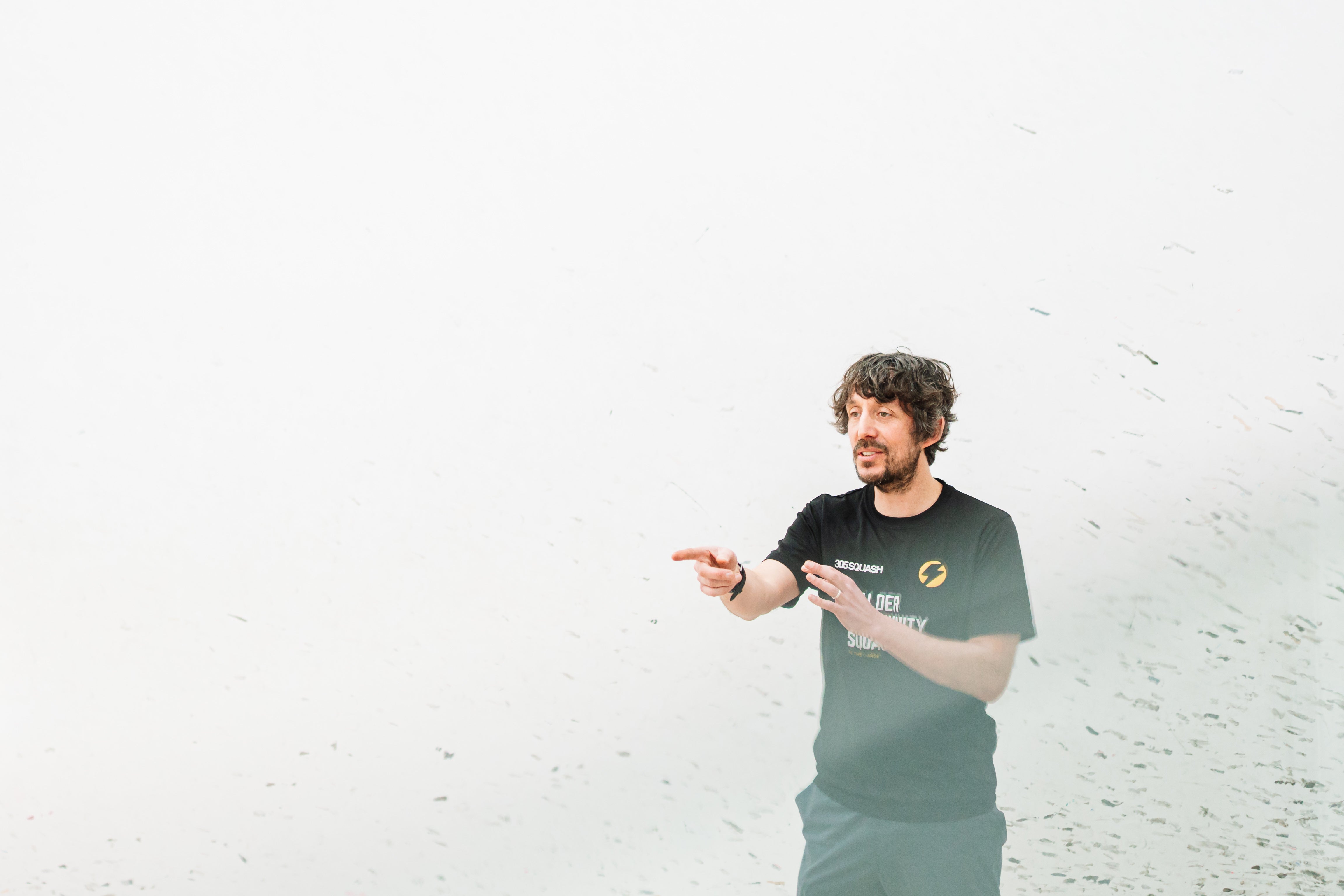
“Firstly, it’s a dictatorship!” laughs Dunne. “We’ve no committees, so there’s no in-fighting. I make all the decisions. I’ve been a member here since I was four years of age, so when I took on this role I knew exactly what it needed.”
The second reason is a squash competition concept invented by Dunne called NextGen which has proved incredibly successful at keeping members engaged and bonded.
NextGen competitions are scheduled over a whole day on the club’s three courts every five or six weeks. Players are organised into groups of six of a roughly equal standard. Those six players all play each other on rotation for 12 minutes each, with a 90-second rest before they play the next person. The sessions lasts around an hour and a quarter.
When the six players are all ready to start across the three courts, Dunne blows the whistle. The player who’s winning when the whistle goes after 12 minutes wins and earns points. If scores are level, it’s sudden death.

In each match, both players are given three ‘powerballs’ each. If they are behind and receiving serve, a player can call a ‘powerball’ and if he or she wins that rally, they earn two points. Dunne notifies players when 10 minutes have elapsed, and no powerballs can be used in the final two minutes.
Over the course of the day, there are five or six NextGen rounds (each with players of a different standard). Every player in each group of six plays for a team (all No.1s are one team, No2s are another team etc) so every point counts towards a team total. At the end of all matches, there are individual and team prizes, provided by Dunlop. Everyone then heads to the local pub for drinks and a buffet.
Dunne says: “After a NextGen session everyone is absolutely shattered – but happy! It’s a great way for all players, from beginner to advanced level, to get five good games, meet new people and bond together.
“The format means all players know the start and finish time and can plan it around the rest of their day. You finish absolutely exhausted, you’ve potentially met five new people, had five decent games, swapped numbers and arranged to play again. It works a treat.”
Construction of the club’s new tennis and padel/pickleball domes was severely hampered by two storms last year. Now they are finally built, focus is firmly on the squash centre. Once planning is approved — which Dunne anticipates won’t be an issue as the club has leased the land for over 25 years — the architects have said construction will take a year.
With plenty of good things happening within squash in Ireland, the opening of a major new hub would be a further boost for the sport on the Emerald Isle before LA 2028.