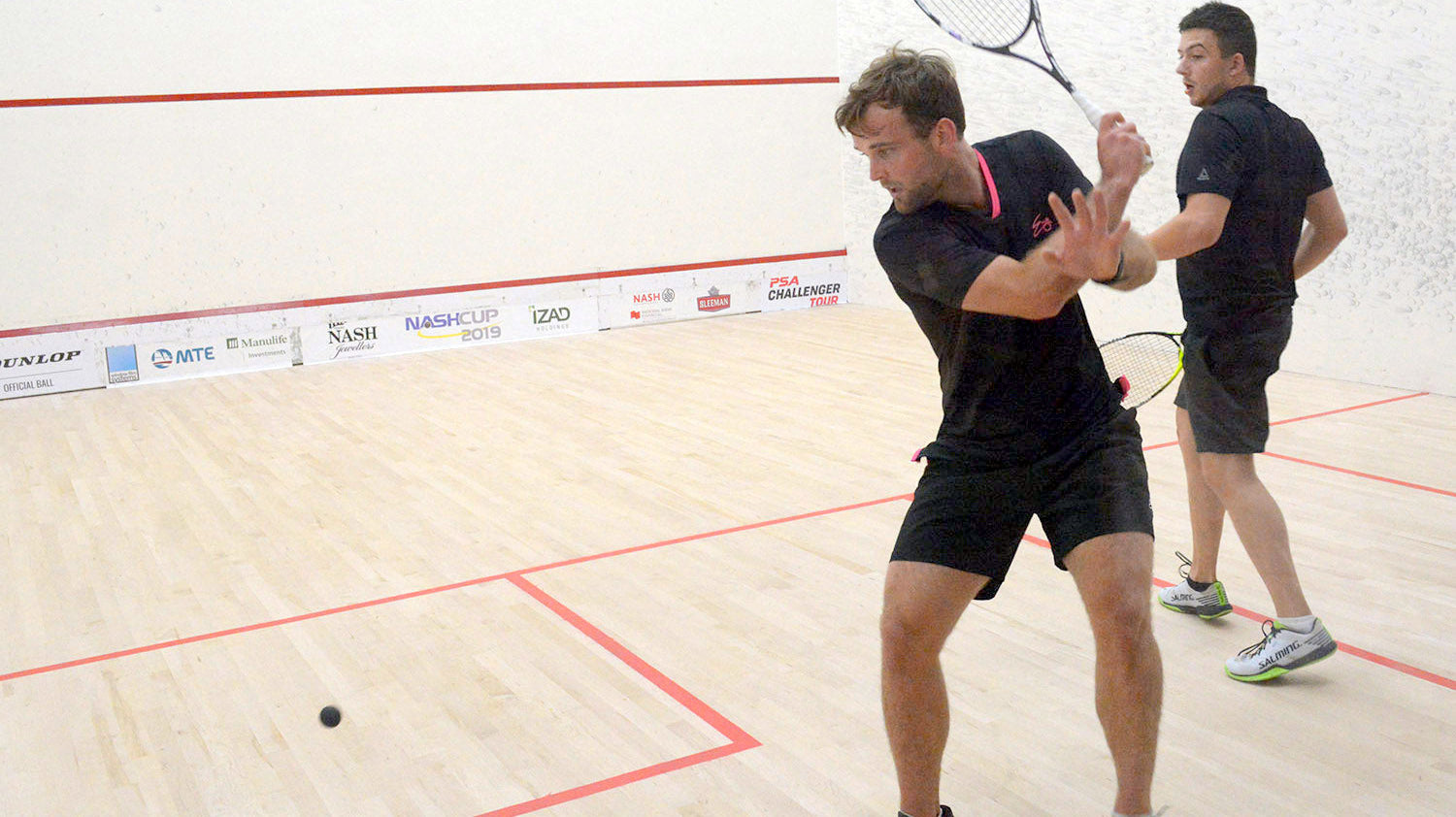


British Open racketball/Squash57 champion, coach and former squash pro Mike Harris offers some tips for squash players dipping their toe into the bigger ball version of the sport.

The rules of racketball are the same as squash apart from the serve — the ball is bounced on the floor first and doesn’t have to hit above the cut line. You also get a second serve if needed.
However, the bigger, bouncier ball adds a slightly different dimension to the tactics and strategy of traditional squash. Here are my top tips for those new to the game.
Be patient
Developing opportunities to attack through good length and width is the same in racketball as in squash — it just takes longer!
One of the things I found most engaging about racketball was I had to work harder to create openings to win the rally. It takes more shots to create winning opportunities. When I first started, I found that quite enjoyable to get my head around.
 Focus on width with your drop shots
The bouncier ball makes playing a winning drop shot more difficult, so focus on a tight width on your drops instead of trying to hit the nick.
You'll need to adjust the angle on your drops and look to run it along the wall, or hit the side wall at your opponent's impact point. Hitting the floor first is key.
Makes alterations to your drives
Because of the larger ball size and how it spins, I coach my racketball players to hit straight drives to a width of three or four floorboards from the sidewall - slightly wider than in squash.
This is to avoid the ball clipping the side wall and bouncing out into the middle in a far more pronounced way than a squash ball does. It's about understanding the angles.
Obviously, with the bouncier ball, squash players will also need to adjust their length, with the first bounce a foot or two further forward than a traditional 'good length'.
 Change your boast angles
The traditional three-wall squash boast isn't particularly effective in racketball unless you get very lucky and fire one right in the nick. Mostly, it bounces back towards the T area and sets up your opponent for an attacking shot.
You can actually get a lot more spin on a Squash57 ball and there is a specific 'racketball boast' where you skim it at pace into the sidewall, hit the front wall about halfway across, then the spin kicks in and accelerates it across the side wall without much depth.
If you really fire it in fine, it can be a pretty devastating shot. The best players can get real grip and speed on the shot. It's a cool additional dimension to your attacking game and is one of the more unique shots to come out of the sport.
Volley less
The typical pattern of play in squash is to hit to length and hunt the volley, but because of the size and weight of the Squash57 ball, it's much harder to step across and cut the ball off in a controlled manner when it's been driven.
Leaving yourself exposed with a bad volley is far worse than staying patient, letting the ball go and hitting it off the back wall.
Stop fishing for strokes!
Racketball is far less severe with decisions than squash. Strokes are quite rare, unless you hit the ball straight back at yourself or hit a bad shot and don't make much effort to clear.
Because there is more time on the ball in general, strokes are few and far between. That's been a big selling point for lots of people. Those who 'fish' stand out in the racketball community!