


By Framboise Gommendy
Somewhere in the early hours, beneath Cairo’s sodium haze and after the last shuttle bus had long since left, Malak Khafagy was standing at baggage claim.
Her luggage, which held her match kit, her rackets, her shoes, her identity as a squash player, wasn’t there.
She had landed bleary-eyed from Pakistan at 1 am, hoping to compete in one of the biggest tournaments of her life, and the contents of her squash bag — now adrift in the ether of airline logistics — held her chances of even stepping on court.
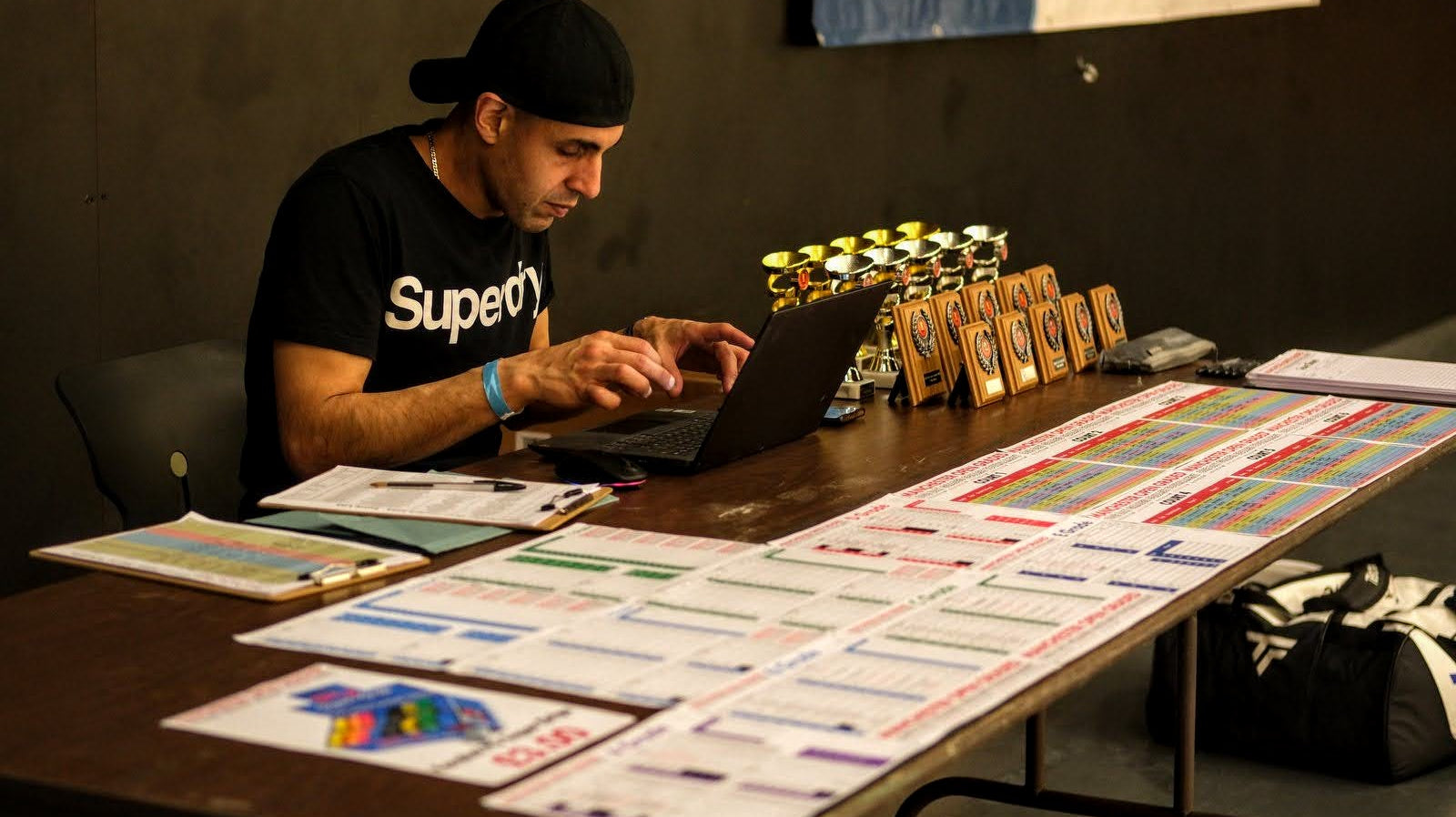
This is squash at the edges: not the spotlight, not the glass box show court, but the corners of the tour, where the top seeds travel with physios and the wildcards borrow kit from their sisters. Where being good — even really good — is no guarantee that anyone will watch, or care, or even get your name right.
But Khafagy played. Of course she played.
Wearing kit borrowed from her sister and someone else’s shoes, she stepped onto the court in El Gouna to face Scotland’s Georgia Adderley, who like Khafagy — occupies that familiar squash no-man’s land between obscurity and breakout.
Five games. Fifty-nine minutes. 5-11, 11-9, 1-11, 11-5, 14-12.
And then it was over. Khafagy had won. Her first PSA match win in four months. A match worthy of a headline. A photo, maybe. But no roar of a crowd. No televised replays. No sponsors queuing for quotes.
Just a player who landed in Egypt without her luggage, and found herself somehow still standing, still swinging, in round two.

“I’m really happy to win this one today,” she said afterwards. “I didn’t have any of my equipment… I arrived at 1 a.m. the day before yesterday and I was borrowing everything: my sister’s shoes, her rackets.”
There’s something both tragic and tremendous in this. Sport likes to mythologise these kinds of victories — gritty, underdog, last-minute heroics.
But in squash, there’s no myth machine. Just the facts. Just the player, and the court, and the silence.
Adderley, too, fought like hell. In the fifth game she clawed her way back from 5-9 to 12-11. She held match ball. She was a single rally away from winning it. But Khafagy stole it back. Stole three points. Stole the match.
There’s no bonus points or commemorative plaques for delayed luggage or mid-match anxiety. Just a result on a website and a line in a draw sheet.
When we talk about professional squash, it’s easy to forget that most players operate far from the glamour of finals day. That the daily diet is travel stress, minor injuries, lost sleep and lost rackets. The tour is brutal not just physically, but logistically, emotionally, financially.
And so much of it is done alone.
“I had to warm up in someone else’s shoes, with a different racket,” Khafagy said. “I wasn’t sure I’d even be able to play.”
She wasn’t complaining. She was just telling the truth. Which is often stranger than fiction.
There will be more matches. More wins and losses. One day, if everything goes right — if the stars align and the rackets arrive and the sponsors care — Khafagy might even find herself on an event poster.
But for now, this was the moment. A quiet win in an overlooked round, built on borrowed gear, jetlag, and sheer bloody-mindedness. Nobody asked her to do it. Nobody guaranteed it would matter. But still, she did.
That’s squash.