

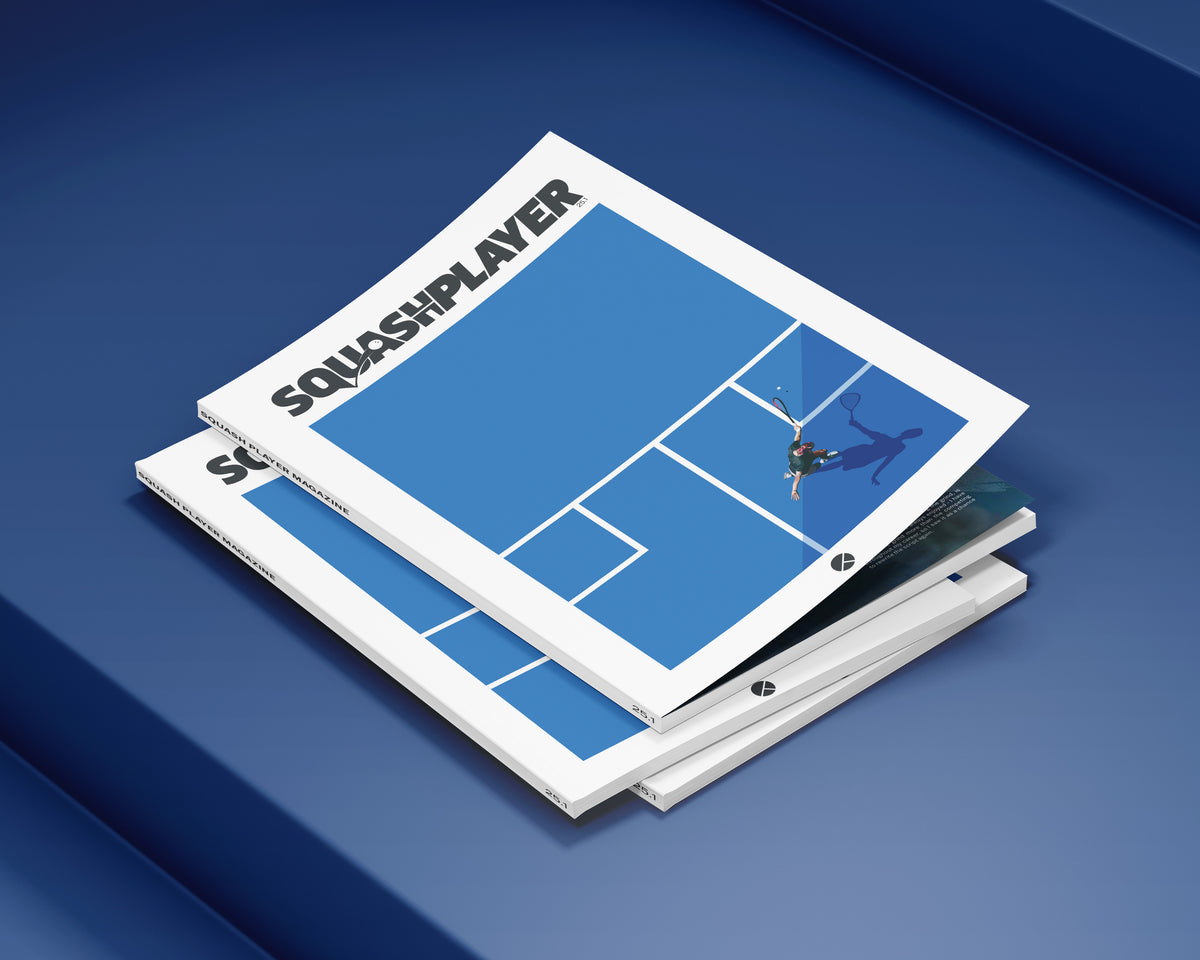

Pain, anguish, recurring setbacks, false hope and a newfound appreciation for her friends, family and fans. These are just some of the emotions two-time World Junior Champion Rowan Elaraby has faced since suffering a career-altering injury almost 12 months ago.
Competing for a place in the quarter-finals of the biggest event on the squash calendar, the PSA World Championships, in April, the 25-year-old Egyptian was in the form of her life - having already bested tour-stalwart Joelle King before delivering a ruthless 23-minute 3-0 win against Lisa Aitken of Scotland in her opening two matches.
“This was a different tournament for me” said Elaraby, “Because for a long time, I didn't feel this comfortable on court. I was playing freely and producing the squash I wanted to produce.”
Her third-round encounter was against close-rival Georgina Kennedy. Competing on the glass court for the first time in the event, Elaraby stormed out of the gates, taking a clinical first game 11-1.
Elaraby’s barrage of points continued well into the second game and the momentum was firmly in her favour until Elaraby - often known as ‘Tinkerbell’, owing to her smaller-stature - collapsed to the floor in agony after a seemingly innocuous movement.
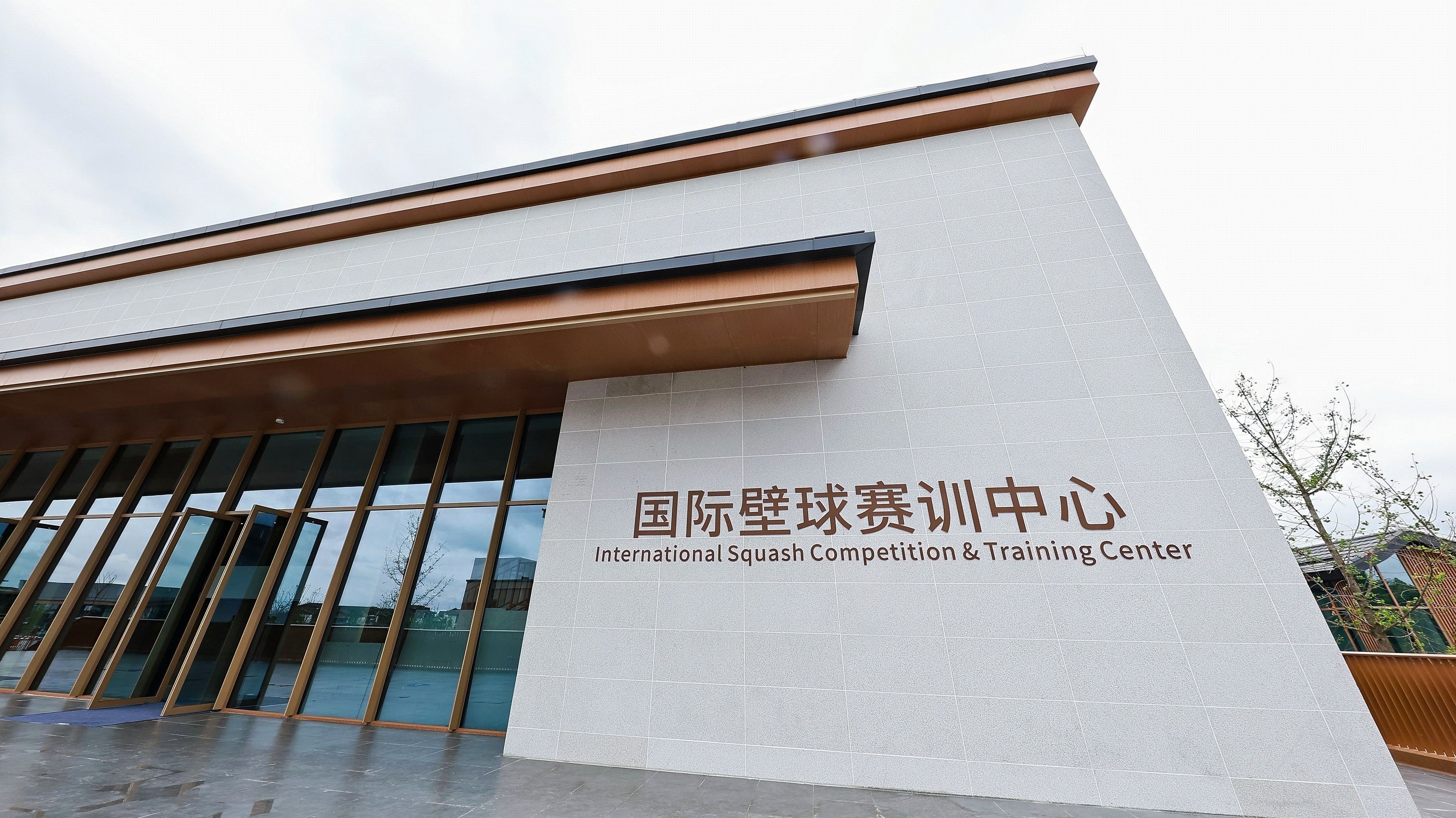
The cries of pain echoed through the Lakeshore centre.
Though with little indication as to what had happened, many including Elaraby herself believed she would see the match through to its conclusion and live to fight another day.

“If you saw the video, nothing really happened,” she said. “My foot didn't twist, nothing happened. But in reality, my foot got twisted inside the shoe itself.
“But when I went out [of the court], the pain was actually so bad that I couldn't tolerate it. It was something that had never happened to me before.”
After attempting to resume the match, Elaraby managed only a handful of points before being forced into a heartbreaking early retirement.
Both the severity of Rowan’s injury, and the road to recovery that lay ahead were stories waiting to unfold.
Elaraby spent the following days in Chicago with close friends, and fellow players, Nada Abbas and Hana Moataz and believed she would be in shape to play the British Open in just two weeks’ time as initial X-Rays taken after the match showed no visible breakages - all signs appeared positive.
Yet while early signs were positive, Elaraby knew all was not as it seemed.
“The weird thing is, the X-ray came out pretty good. The bones were good in place, nothing strange in the foot. But it was very swollen. It was very bruised,” she said, visibly emotional when reliving the moment.
“You could tell when you looked at my foot that there was something wrong with it. There's something big that's happening.
“One of the main reasons why the X-ray came out this way is because my foot was so swollen at the time”.

This severe swelling had meant initial scans had failed to unearth what was happening underneath the surface. With the pain failing to subside, Elaraby sought further investigation. After two-days of injections, the swelling had reduced enough to enable an effective MRI scan of her foot - followed by an agonising two weeks wait for the results to come back.
Even then, false hope was presented, and it wasn’t until a third opinion was sought the the true scale of her injury was revealed.
“Mentally, those two weeks were the toughest to deal with,” she said.
“I went to a doctor in Palm Hills and I showed him my MRIs, and I showed another doctor abroad my MRI and both said it's nothing big. It's just an inflammation in my plantar fasciitis.
“Then my brother took the MRI results to the doctor, and this is when he told him I have a broken bone in my foot – and it's very rare that this bone gets broken.”
The only time a doctor would expect to see this bone broken would be after, for example, a car had ran over someone’s foot.
At this point, the true timeline for recovery became clear. Where she had initially expected to be fit and healthy within six weeks, she was now facing the reality of multiple surgeries and a minimum of six months’ recovery time.
Rowan recalled the car journey she took after receiving the diagnosis. A journey she says she, nor her close friends Hana Moataz, Nada Abbas or Zeina Mickawy, will ever forget.
“I immediately broke down”, said Elaraby. “I kept crying my heart out the entire ride.”
After an agonising call with the doctor, two options were presented. The first was to undergo surgery, with a 98% chance of success, but a long recovery period. The second was to wear a medical boot for a minimum of two months, with no guarantee she would ever return to playing.
The answer was clear: “I didn't have any options. I only had one option which was surgery.”
If a pain-free surgery was what Elaraby had hoped for, what she received was the opposite.
Due to the complexity of the broken bone inside her foot, a pin was placed between the bone that connects her first two toes to the body of her foot - leaving her in a state of constant agony.

“It was the most painful surgery I've had in my entire life.
“I wish nobody this pain. I was screaming for four days just because I was in pain.
“I didn't know what was going on. Everything happened out of nowhere, so I was all over the place. I was hard to deal with. But I’m thankful for having my friends and family to tolerate me during that time. I know I couldn't tolerate myself, so it was really nice having my close ones close to me.”
Three months later, in August 2025, Elaraby underwent a second surgery to remove the pin in her foot.
After months of anxiety, setbacks and heartbreak, Elaraby finally had the opportunity to celebrate some positive news – the surgery had been a success.
“Honestly I felt grateful to be able to move, to be able to use my leg again. It was really hard only depending on the crutches, depending on health. Now I know I will be stronger. Now I know that it's behind me now.”
Focusing on what lays ahead, Elaraby made it clear she is ready to move on and focus on a return to action.
“I don't think I want to keep talking about my injury. It's not who I am. It's not part of my identity. I just want to get it done with and move on. And I know I'm strong. I know this will make me stronger.
“I will do whatever it takes to be back on court again. I know I love this sport. I know I will give it everything to be on court again and maybe, you know, be on top of the game afterwards.
“I hope it's a strong comeback and I can't wait to prove to myself and also to people that I'm still here and I can still compete."
And compete she did, making a winning return to the court at the Steel City Open last month, beating Ireland's Hannah Craig 3-0 in her first competitive match in a year.
“I can't wait to be back.”
Words: Rob Ellis
Photos: Rob Ellis