



Sabrina Sobhy won her seventh career PSA title in Calgary last week — not because everything clicked, but because she had a plan in place for when it didn't.
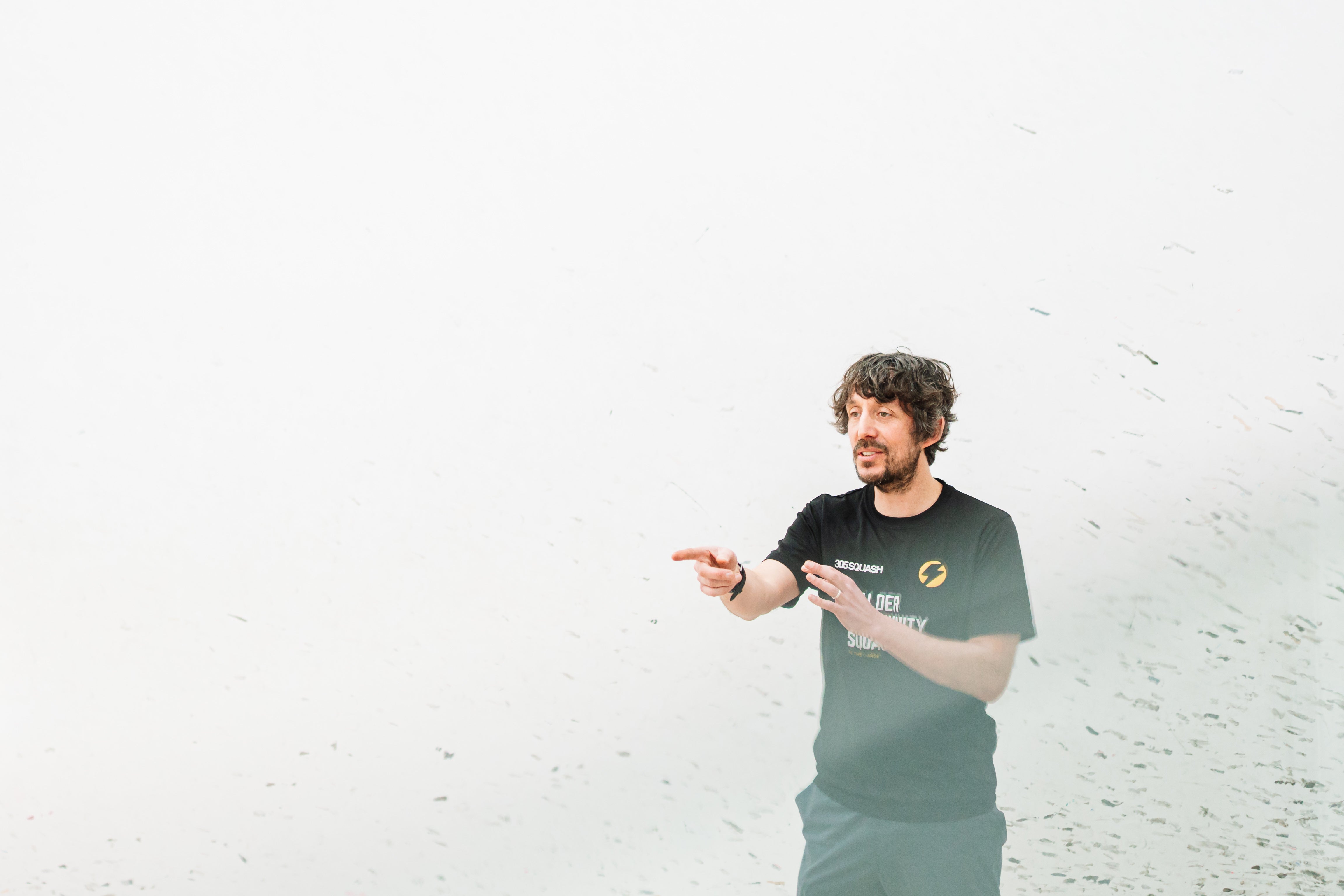
The former US national champion works with Jesse Engelbrecht, founder of SportMind, to give her mental tools which help her both on and off court.
Here, Jesse explains how these mental tools helped her overcome a two-game deficit in the semi-final, and several other obstacles, to lift the second PSA title of her season in Canada.

Sabrina arrived with a cold. Calgary sits at altitude. The air is dry. Her energy wasn't where she wanted it. Her squash through the early rounds felt scrappy to her — not as smooth or fluid as she knows she can be. But she won anyway.
Firstly, some information worth knowing: 12 months ago, Sabrina wasn't on a squash court at all. A wrist injury — a TFCC tear and a fractured Hook of the Hamate — kept her off tour for six months, ending in surgery on New Year's Eve.
She described the time away as forcing her to confront the real 'why' behind her career.
She came back into this season ranked outside the world's top 100. Those doubts don't disappear when you start winning. They travel with you.
There's something I work on with every athlete I coach, regardless of level. It doesn't photograph well. You won't see it on a highlight reel.
It's the ability to compete well when you're not performing at your best.
Most athletes fixate on their ceiling — the peak day, the match where everything flows. Those days exist. They're also never guaranteed.
What I've seen, working with athletes from juniors all the way to world top 10, is that the ones who sustain success over time have something else going on beneath the surface.
They've raised their floor. Not their ceiling. Their floor.
The level they can compete at when conditions are difficult, when the body isn't right, when the feel isn't there — that level is higher than most, and it's been built deliberately.
Sabrina's week in Calgary was a masterclass in that.
After her final, she sent me a voice note. She said something that resonated:
"I kind of accepted that it was a bit scrappy and maybe not as smooth and fluid as I'd like."
There's a word in that sentence that matters more than any tactic or physical attribute: Accepted.
Not fixed. Not fought. Not panicked about.
She noticed what was there — the scrappiness, the physical challenge of competing through illness at altitude — and she didn't add a layer of self-criticism on top of it. She didn't spend three rounds trying to locate a version of herself that wasn't available that week.
She accepted the conditions of her performance. And then she competed inside them.
This is harder than it sounds. The instinct for most athletes is to resist. To tighten. To push harder for the feel that isn't coming — which, almost always, makes it worse.
Radical acceptance isn't passive. It's one of the most active things you can do in competition. It frees up the energy that would otherwise be burned fighting reality, and redirects it toward the only thing that actually matters. The next point.
The semi-final was where this was really tested.
She lost the first two games, and her mind — like every athlete's mind in that moment — started doing what minds do when the situation looks bleak.
I want you to read what she said next carefully. Because this is the part of elite performance nobody puts on their Instagram page.
"There were thoughts in the match like — shoot, am I gonna move my flight? What am I gonna do with two days free? How am I gonna spend the rest of my days when I'm not in the event?"
At 0-2 down in a semi-final, the brain had already started planning her exit and writing the ending. Not because she's mentally weak. Because she's human.
For someone who spent six months unable to hold a racket, those thoughts arrive with extra baggage.
This is what the mind does under pressure. It runs probability calculations. It takes you out of the court and into an imagined future where the match is already over.
Here's what I want you to sit with: this happens to everyone. Juniors. Professionals. World top 10 athletes. The thought that says this is done, start planning for what's next — it doesn't discriminate by ranking.
The difference isn't whether the thought arrives. The difference is what happens next.
Sabrina didn't fight the thought. She didn't try to convince herself it wasn't there. She gave it space. And then — quietly, without drama — she redirected.
"These thoughts came about and… whatever. Just try and really dig deep and find a way."
That's not forced positivity. That's something much more sophisticated.
It's the ability to notice an unhelpful thought, acknowledge it without letting it run the show, and return to what's actually useful right now. You're not the thought. You're the one noticing it. And because you're noticing it, you have a choice about what to do next.
She won that semi-final 3-2.
The final was tighter than the scoreline suggests. She won 3-0 — but she was behind in both the first and the third games, and had to save a game ball late in the third before converting on her second championship ball.
Leading 2-0, up 10-9 in the third — she lost the rally. Championship point, gone.
"Just not dwelling on that and knowing there's another chance, another opportunity."
One sentence. But behind it is a whole architecture of practice. The ability to lose a crucial rally and not carry it into the next point is not automatic. It's the result of hundreds of small repetitions — in practice, in matches, in the daily work of building awareness and recovery speed.
She converted on her next chance. 13-11.
What I want you to take from Sabrina's week isn't that she's exceptional (even though she is).
It's that the mental skills she used — acceptance, thought-noticing, redirecting, staying in the point — are not reserved for World Top 20 players.
The unhelpful thoughts that arrived at 0-2 in that semi-final? You've had versions of those. So have I. So has every athlete reading this.
The question was never whether the thoughts would come. It was always about what happens in the moment after they do. Do they hijack the mind? Or do you give them space, let them pass, and find your way back?
That gap — between thought and response — is where the real mental game lives. And it can be trained, widened, and made more reliable.
That's what raising the floor actually means. Not performing better on your best days. Competing better on the hard ones. The cold days. The altitude days. The 0-2 down days.
The days when the thoughts about rebooking your flight are right there in the middle of a professional semi-final. And you find a way anyway.

On Tuesday 24 March at 8:30pm UK / 3:30pm EST, I'm running a free live workshop — Play Free Under Pressure — and this is exactly what we're building inside it.
Click here for more information: https://www.sportmind.io/play-free-under-pressure-live?lid=4025