





The Rise Of Egypt
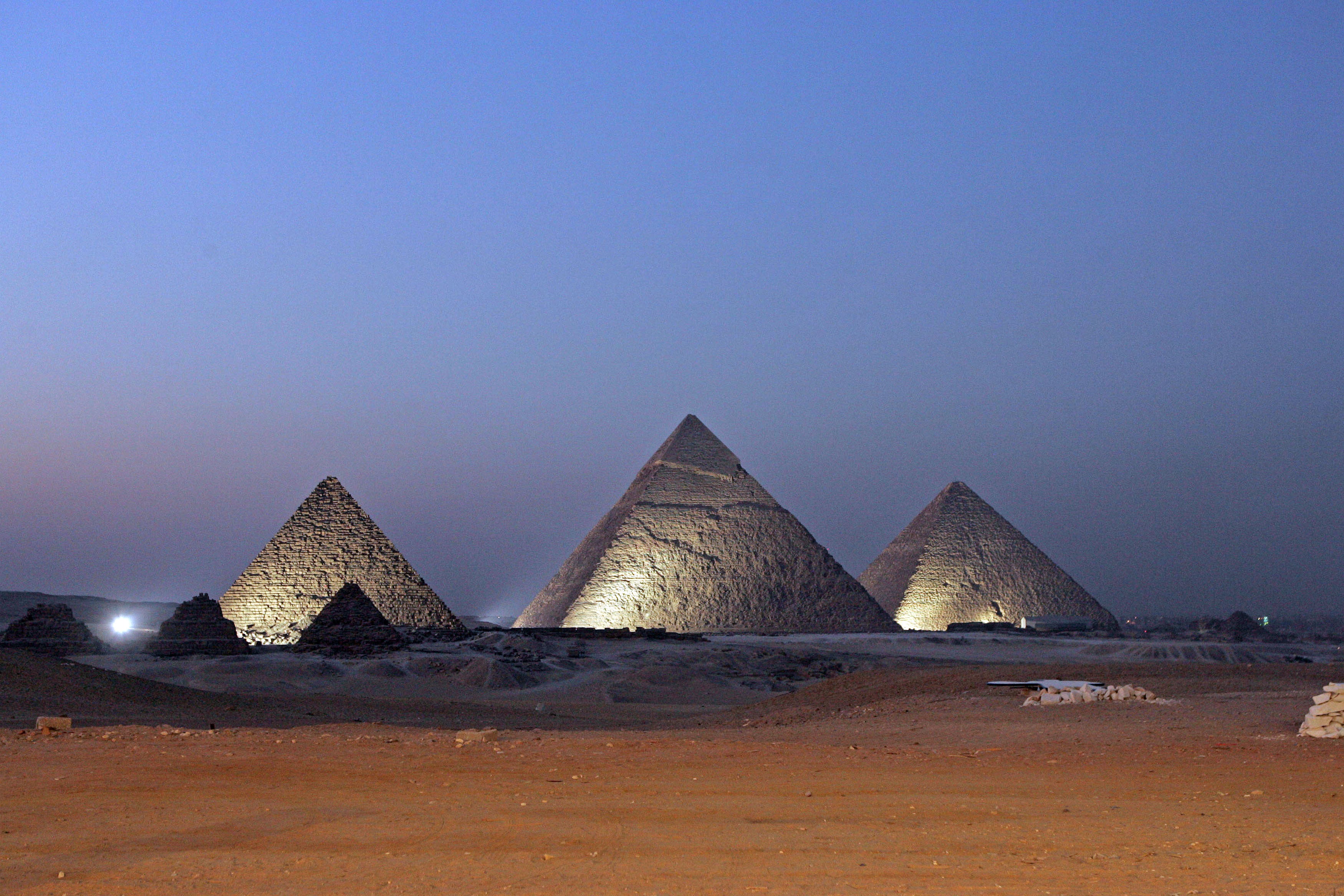
In May 1996, beneath the Pyramids of Giza, squash changed forever.
The first Al-Ahram International brought the sport to one of the most iconic locations on earth, transforming a traditionally enclosed, club-based game into a global spectacle.
Driven by the vision of Al-Ahram editor-in-chief Ibrahim Hegazy, supported by President Hosni Mubarak and carried by the emergence of Ahmed Barada - a singular convergence of politics, media and sporting charisma - the tournament marked the beginning of Egypt’s extraordinary rise from respected outsider to squash’s dominant superpower.
Barada’s run beneath the Pyramids turned him into a national icon and inspired a generation of young Egyptians to believe the sport belonged to them.
What followed was the creation of one of the most successful sporting ecosystems in modern history. Egypt’s junior system exploded with participation. Clubs became talent factories. Coaches and former champions passed knowledge through generations.
This series explores the story of Egypt’s squash revolution in depth: the origins of the game in Egypt, the political and cultural forces that shaped it, the pioneering figures who built the foundations, the rise of the women’s game, the mythology of the Pyramids, and the generations of players who turned inspiration into sustained dominance and remade the sport in their own image.

a truly egyptian affair
Extract from Squash Player Magazine 1996
Martin Bronstein Travels To The Pyramids To Watch The Egyptians Stage A Squash Spectacular In The Desert.
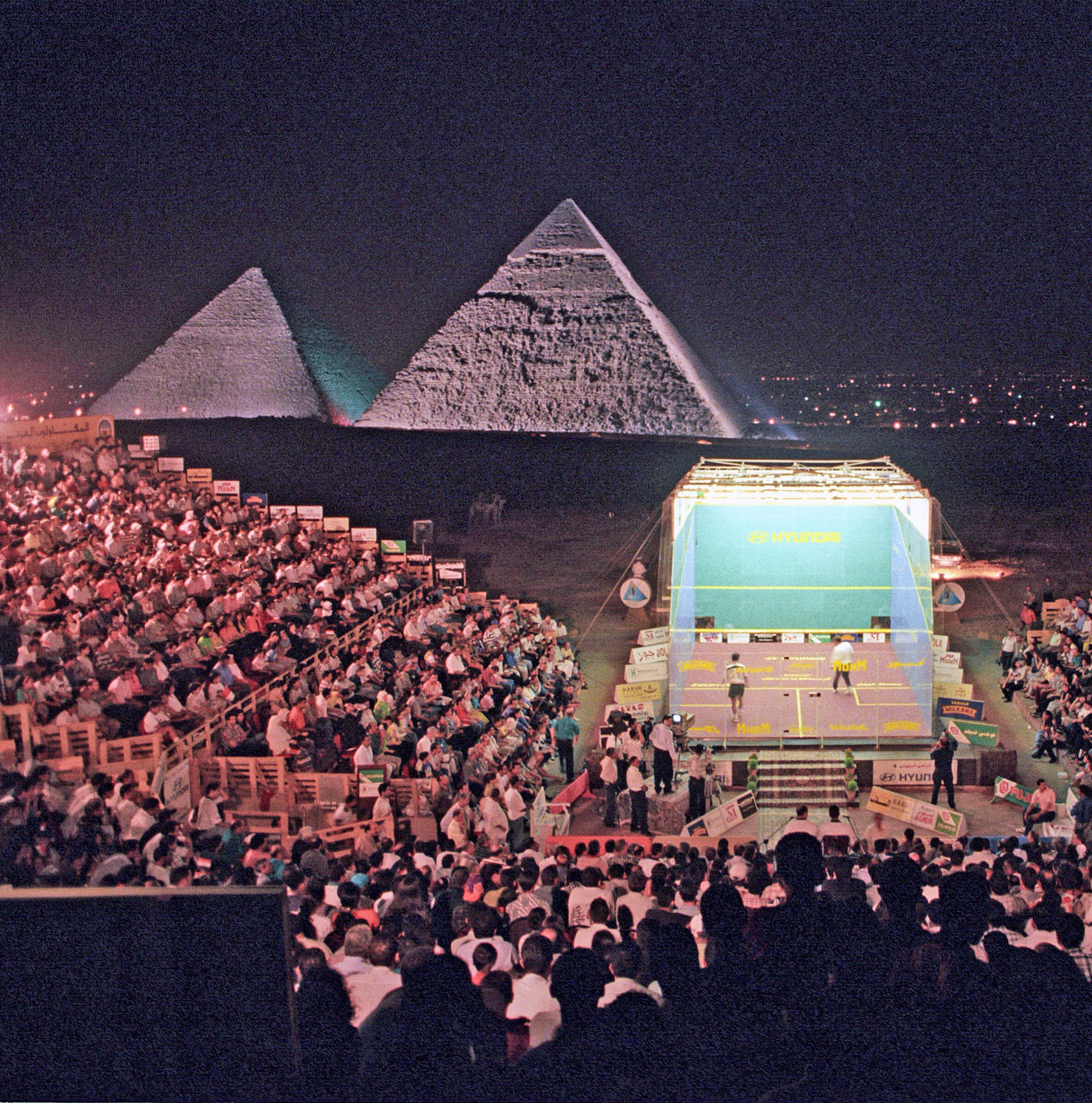
The night squash dreamed
What emerged in May 1996 was not simply a tournament but an act of national staging and at the centre of it all stood Ahmed Barada.

Inside The lion's den
For former World No.3 Paul Johnson, who played in those early years of the event - including the debut event of 1996 - it remains one of the most surreal experiences of his career.

The Sons of egypt
How Ahmed Barada, Hosni Mubarak and Amr Shabana converged to change squash forever
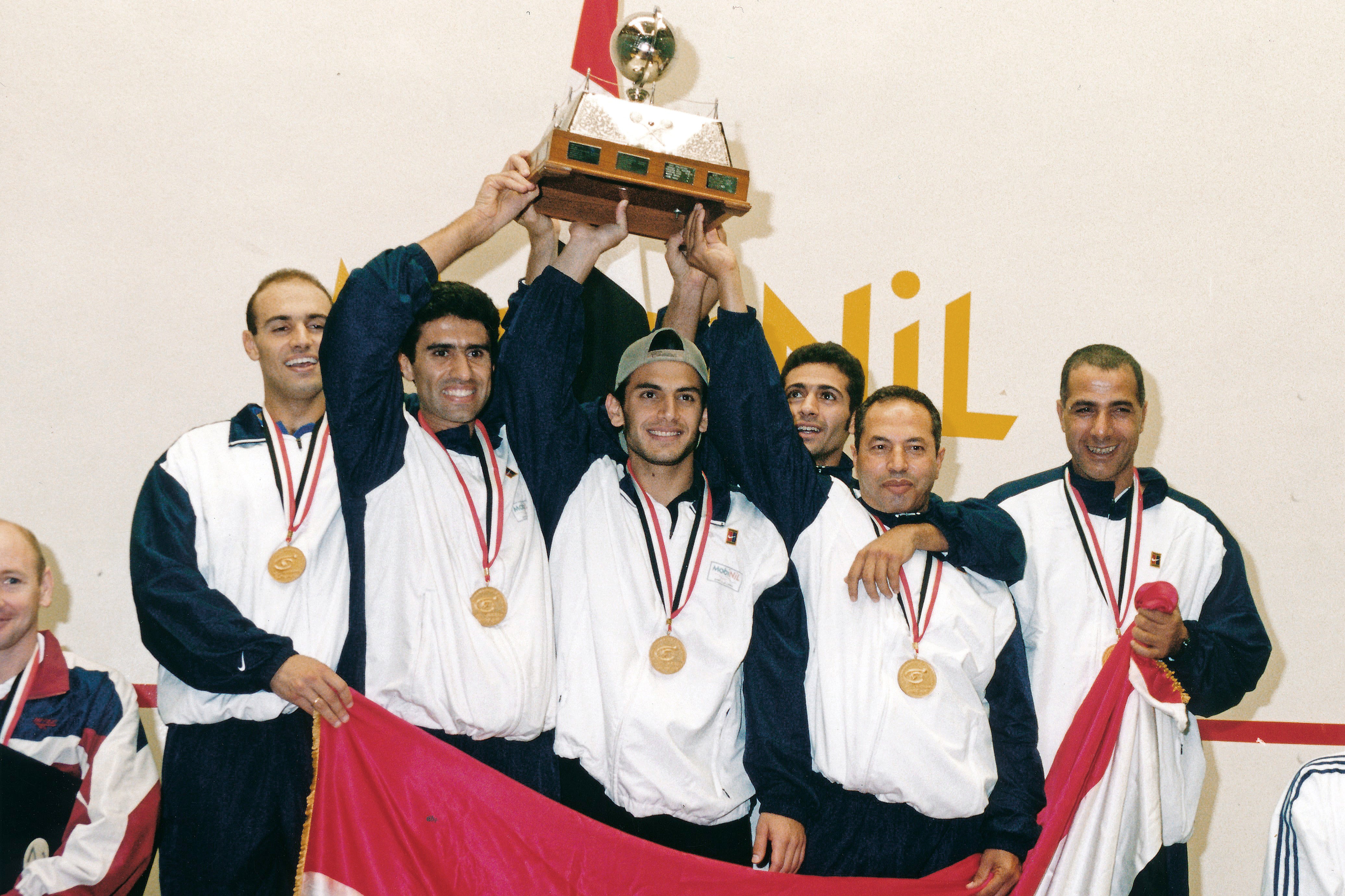
1999 - Men's Teams
In October 1999, against the backdrop of Cairo’s historic skyline, a revolution unfolded on the squash court.

2008 - Women's Teams
The Night Egypt’s Women Redefined Squash at the 2008 Women's World Team Championships

Dr. Samiha
Meet Egypt’s pioneering Game Changer - Dr. Samiha - who blazed a trail for a generation of young girls to play the game.

The First Match
While Barada stole the headlines and Jansher Khan took the title, England’s Simon Parke made history - the first player to win a squash match at the Pyramids.
30 years of an icon
For three decades, squash has returned to the Pyramids of Giza searching for something larger than victory.
Since the first staging of the Al-Ahram International in 1996, the glass court beneath the ancient stones has become more than a sporting venue. It has become mythology. A place where modern athleticism collides with one of civilisation’s oldest landscapes, where movement and monument exist in the same frame.
The images endure because they feel almost impossible.
Players diving across polished floors beneath structures that predate organised sport itself. Floodlights cutting through desert darkness. The geometry of a squash court suspended against the geometry of antiquity.
And yet the story of the Pyramids is not merely aesthetic. It is transformational.
The venue arrived at precisely the moment Egypt was beginning to reimagine its place within world squash. Ahmed Barada’s emergence in the 1990s gave the country a sporting hero; the Pyramids gave that rise a stage grand enough to contain it. Together, they altered the trajectory of the sport.
What followed was not just a tournament, but a movement.
Generations of Egyptian children grew up watching the world’s best compete in front of the most recognisable monuments on earth. Many would later return there themselves as professionals, chasing the same images they had first witnessed as juniors sitting in the crowd or watching on television.
Over time, the venue evolved alongside Egypt’s dominance of the game. The early editions now feel raw and experimental; later versions sharper, grander, more cinematic. But the essence never changed.
The Pyramids made squash feel important.
Not hidden away inside private clubs, but worthy of spectacle. Worthy of history. Worthy of global attention.
Thirty years on, the venue still feels unique in world sport: not simply a backdrop, but a statement.


