



“The scores are tied — two sets each. Laksh Narang has clawed his way back from 2–1 down.”
So begins Ziddh, a film that does not so much open as detonate. The camera is already trembling with the breath of a young man on the edge — a player whose sweat is indistinguishable from fear, whose future is balanced on the same knife-edge as the rally unfolding in front of him.
It is squash, yes. But it is also everything else he carries: doubt, duty, ambition, family, history, expectation.
Ziddh is the Hindi word for stubbornness — but not the petty kind. This is the stubbornness that keeps a young athlete standing after he should have fallen. The refusal to bow to a world that prefers him compliant, respectable, contained.
The film is made by someone who knows that stubbornness intimately: Aryaman Adik, a former Indian junior national squash player, now a filmmaker who turned his own unspoken battles into cinema.
As squash hurtles toward its long-awaited debut at the 2028 Los Angeles Olympics, Ziddh arrives on that Oylmpic flame - reminding us that before medals, before podiums, there is the inner war. The one no camera usually sees.
Plenty of directors have attempted sports films. Very few have lived the sport they’re filming. Almost none have lived squash.
And that is the first thing you feel in Ziddh: someone who has been inside the glass box, who has tasted the claustrophobia and the silence, who knows the peculiar violence of a rally that lasts too long.
“Squash is inherently cinematic — the breathing, the echo, the isolation, the way momentum feels like a living organism,” says Adik.
Ziddh makes good on that. This isn’t a film that explains squash. It immerses you in it.

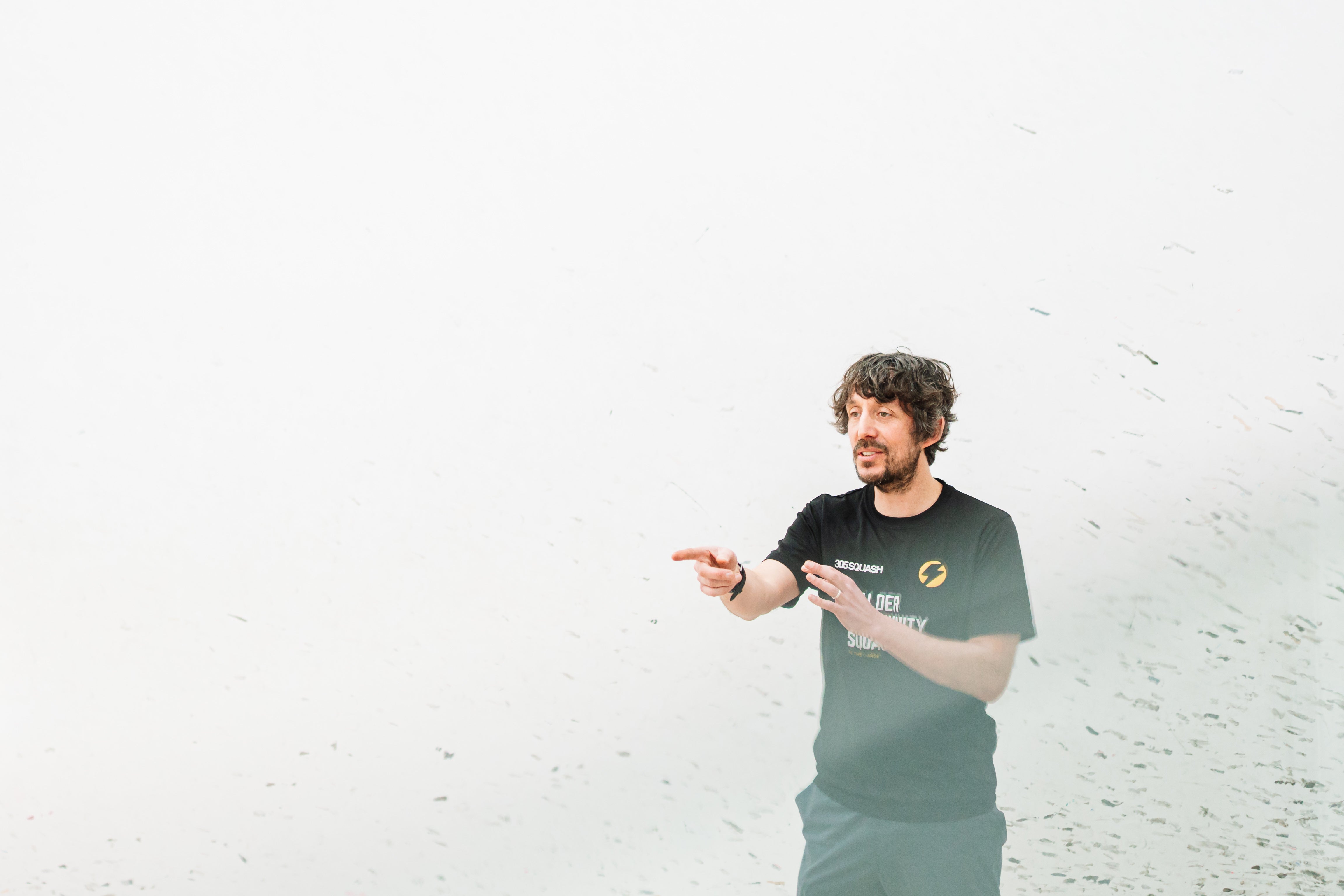
Laksh - the film’s central character and played by Adik himself - finds himself, against all odds, competing in the national final against an opponent played by current top 50 ranked professional Veer Chotrani.
Laksh is every gifted Indian kid who dared to deviate from the script. Every child told that excellence was admirable but only if it fit the blueprint. Every athlete caught between a family that wants security and a heart that craves something far riskier.
The film’s emotional spine is that choice: whether to step into the terrifying, unstructured world of elite sport or return to the safer promise of academia. In the words of Adik, the film is “a story about the weight we all carry — the pressure to be someone else’s dream before you become your own.”
“In India, sport is encouraged — until it isn’t. Families want stability. They want you educated, employable, respectable. Squash is none of those things. It’s lonely and it’s a gamble.
“I wanted Laksh to represent that conflict. He loves the game, but he’s terrified of what his parents will think. That’s a universal fear for so many kids in this country.”
The quiet disappointment in a father’s eyes, the teenage anger, the coaches betrayal - these are scenes with tug at the core of every junior athlete’s experience - and it is clear that in Ziddh, Aidk is as much exploring a concept as he is reliving his own youth.
Even the final is loaded with emotional contradictions. Laksh’s opponent is coached by his own former mentor — a subtle, devastating detail that adds layers to the narrative. On one side of the glass: a player shaped by that coach’s philosophy. On the other side: the rival who inherited it.
There are moments in the match — the rotation around the middle, the tactical dance, the cold beauty of the hold — where their shared history bleeds into the frame. They are not playing each other. They are playing the ghosts of who they were.
Yet it is not victory Laksh is fighting for. It is self-definition.

Professional Player Veer Chotrani
Squash, perhaps more than any other sport, is a metaphor for internal collapse. There is nowhere to hide. There is no crowd noise to drown out your thoughts. There is no teammate to shift the burden. There is you.
And the person who wants to take everything from you, three metres away.
Ziddh understands that in squash, the ball is not the opponent. The opponent is the mirror.
Though careful not to centre himself, the Adik admits the film is a composite of hundreds of personal experiences — matches lost, dreams drowned, silent battles waged in corridors and changing rooms.
Many athletes — especially from South Asia — will recognise the film’s emotional truth instantly. The push and pull between family obligation and personal ambition is not a subplot. It is the air the characters breathe.
The film’s heartbeat, the director said, is the idea that “squash teaches you to confront yourself — to become someone you weren’t sure you were allowed to be.”
Ziddh is not autobiography. But it is personal. It is a love letter written with a slightly trembling hand.
Squash has long deserved a film like this — something visceral, poetic. Not a tutorial. Not a biopic. Something that captures the way the game feels rather than the way it looks on broadcast.
“Everyone tries to film squash as a sport. But squash is an emotion. Film the emotion and the sport will follow,” Adik explains.
Ziddh follows the emotion.
As squash enters the 2028 Olympics with a strange combination of relief and disbelief, it is apt to pause and reflect. The Olympics will not show squash’s soul. They will show scoreboards and highlights. They will show champions, not the cost of becoming one.
Ziddh shows the cost.
It shows how a match is stitched together from compromises. It shows the toll on the families who don’t always understand. It shows the loneliness at the core of the game. And it shows why, despite all of this, players keep coming back: because there is no drug like chasing a point that matters.
No spoilers. But the last rally of Ziddh is one of the most arresting pieces of squash ever put to screen. Not for the shot-making. Not for the choreography. But for what it symbolises.
It is a moment where the film finally answers its own question:
What does it cost to chase your dream? And what does it cost to let it go?
Laksh’s face — drenched, exhausted, almost pleading — is not the face of someone fighting an opponent. It is the face of someone fighting himself.
Someone trying to decide who he wants to be. Someone realising that the world will not wait for him to decide.