The team leading GB Squash into its first ever Olympic Games has been assembled — and it features a mixture of new and old faces.
With just 20 months remaining (at time of writing) until the first serve is struck at Universal Studios Lot in Los Angeles to mark our sport's eagerly-anticipated Olympic debut, squash's birthplace nation has made key appointments as its preparations begin in earnest.
Olympic status brings with it new layers of governance, administration and funding systems. The last few months have seen handshakes and Teams calls aplenty as the British squash hierarchy and their counterparts within the GB Olympic system suss each other out.

Great Britain's plans for their Olympic squash debut are unarguably more complex than any of their competitors' in the sport. No other nation will essentially have to create a new national governing body before the Games, as GB Squash has had to from its separate (and directly competing) neighbours England Squash, Squash Wales and Scottish Squash.
Nonetheless, GB Squash is now officially born — and a familiar name on the staff list is Scotsman Stuart Crawford, who has been appointed head coach.
He will simultaneously continue the role as England Squash national coach which he has held for two years, where he succeeded the long-serving David Campion.
Before his England role, Crawford was a pro player and national coach for Scotland and coached at the University of Pennsylvania, where he led the men's team to its first ever College Squash Association national title and the women's team to a no.2 national ranking.
Crawford has already begun liasing closely with Wales national coach David Evans and Scotland's Paul Bell regarding preparation of their players who may come into the Olympic conversation.
The more eagle-eyed squash viewers may have already spotted Crawford in Welshman Joel Makin's corner at the recent Egyptian Open — diplomatically wearing a Team GB t-shirt, instead of his England Squash top, while coaching him!

Nigel Donohue started as GB Squash's Performance Lead over the summer and brings with him a treasure chest of Olympic experience.
Donohue represented GB in judo at the 1992 and 1996 Olympic Games and won a bronze medal for England as a 52kg flyweight wrestler at the 1986 Commonwealth Games in Edinburgh.
He then became a highly respected performance director at the British Judo Association, delivering podium finishes at Rio 2016, Tokyo 2020, Paris 2024 (both Olympic and Paralympics) as well as the European Games and Commonwealth Games. He latterly worked as a performance consultant across Olympic and combat sports.
In these leadership roles, Donohue has amassed deep knowhow in designing high-performance systems, developing athlete pathways and securing major programme investment.
These nuanced skills (combined with a bulging contacts book), have already proved immensely valuable to GB Squash in Donohue's first few months in post, particularly in managing relationships with the Olympic funding body UK Sport, whose demands and standards when it comes to return on investment are somewhat more exacting than squash was used to before Olympic status came along.
Matt O'Grady and Louise Pickford will work with Crawford and Donohue as GB Squash's physio and team leader respectively. Pickford recently joined GB team leaders from other sports on a visit to Stanford University, which will be Team GB's prep camp for five days before travelling south to LA.
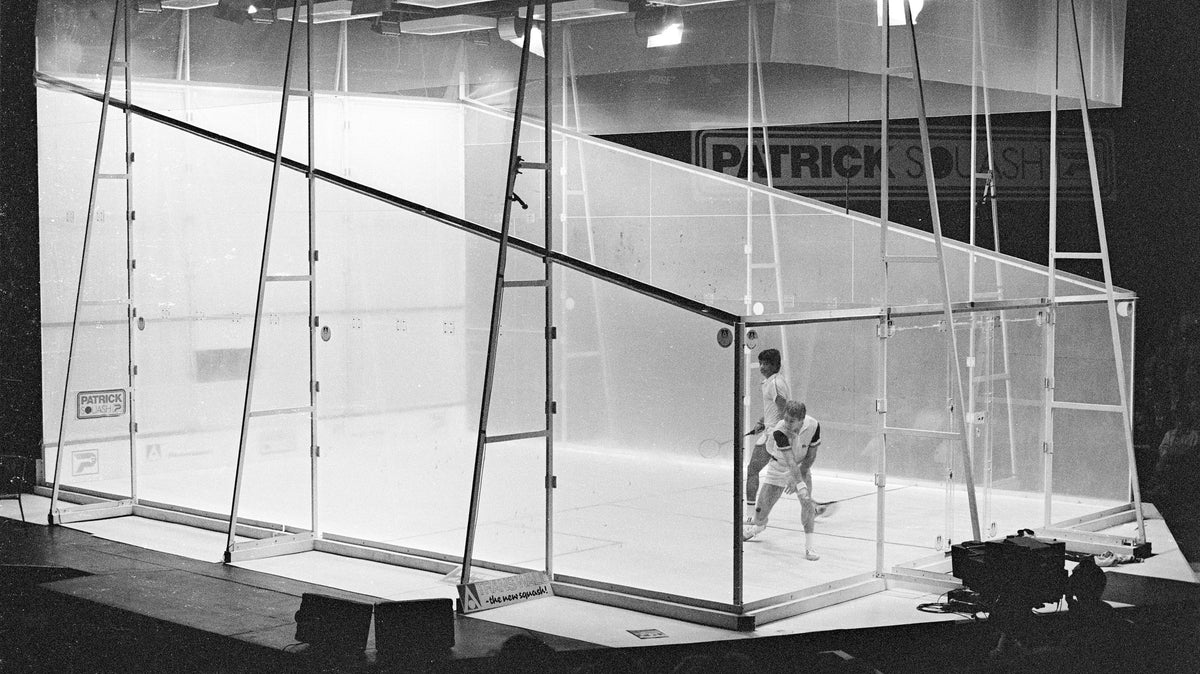
One other nugget of information about the Olympic venue: there will be an all-glass squash court at the athletes' village at the University of California's campus in Westwood. The 32 squash players will train there, of course, but time will be set aside for other athletes to try it out too.
Overseeing Crawford and Donohue's work in the run-up to LA will be GB Squash's committee, chaired by Charlie Cowen, with Karen Williams and Ally Whike as vice-chairs.
Cowen is a former director at the England and Wales Cricket Board and Chair of Bloomsbury Football, one of London's largest sporting charities. Williams is Head of Performance Strategy & Operations at British Gymnastics, while Whike is Aquatics Director at Swim England.
Another new relationship for GB Squash to navigate is with Sport Org, a multi-sport organisation that works closely with UK Sport to help governing bodies "create the environment needed for athletes and support staff to maximise the opportunities presented by the Games."
GB Squash's relationship with Sport Org and its chief executive Nigel Holl is only just beginning, but a statement published on 7 October promised the body would help squash "benefit from shared services, operational support and high performance expertise, enabling them to focus more of their resources on preparing athletes to perform at their best when it matters most."
Moving on from the bureaucracy, we finally come to the most important members of the GB Squash team: the players.
Selection, of course, will depend entirely on the players' performances, initially at next summer's qualification event, the European Games in Istanbul, and then on their world rankings on the all-important cut-off date of 22 May 2028. As per the qualification criteria, GB will take a maximum of two men and two women to LA.
Before then, in the next couple of months, GB Squash will announce two small groups of players who will receive UK Sport support for their preparations.
The briefest of glances at the world rankings will probably offer reliable clues as to the identities of those players — however, any omissions from the list need not be too downhearted.
The list of players was described to Squash Player as "fluid", with the potential for others to be added to it if they come into Olympic team contention with sharp rises up the rankings.
As LA28 draws nearer, the list will inevitably be whittled down as players move closer to securing their places at the Games, and others fall out of contention.
It's all rather exciting, isn't it?