


If you’re getting started in squash, it helps to understand what the sport is, where it came from and why it continues to grow in popularity.
Whether you’re learning how to play squash or just exploring your options for a new activity, this guide gives you some essential background and context.

What Is Squash?
Squash is a dynamic, high-energy indoor racket sport played between two players (singles) or four players (doubles) on a four-walled court.
Using a small rubber ball and a stringed racket, players hit the ball off the front wall, aiming to outwit their opponent through placement, pace and positioning. Quick footwork, tactical thinking and sharp reactions make squash one of the most physically demanding and mentally engaging sports in the world.
The game originated in the early 1800s at Harrow School in England. Students began playing a variation of “rackets” in a confined space with softer balls that “squashed” on impact – giving the sport its unique name. Over time, squash spread internationally and became a recognised competitive sport.
Squash has evolved into a globally recognised sport with a global professional tour – The PSA – and a worldwide player base.
To learn more about the history and evolution of squash, read our in-depth guide here


The Fundamentals: The Court
A standard singles squash court is:
• 9.75 metres long
• 6.4 metres wide
• Enclosed by four walls: front, back, and two side walls
• Marked with key features including the service boxes, short line, tin, and out-of-court boundary lines
The front wall is the primary playing surface, but balls can legally rebound off the side and back walls.
Know Your Lines
Before you step on court, get familiar with its layout:
• Front Wall: The main playing wall. The ball must hit above the tin and below the out line.
• Tin: The bottom strip on the front wall — if the ball hits it, it’s out.
• Out Line: Runs across the top of all four walls — if the ball hits the line, or above, it is out.
• Service Line: On the front wall — the ball must hit above this on a serve.
• Short Line: Runs across the floor — the serve must land beyond this line.
• Service Boxes: Two small squares in each back corner where players must stand in to serve – with the serve landing on the opposite side of the court.

The Fundamentals: Equipment
The get started in the game, minimal equipment is required, namely:
• A squash racket (lighter and shorter than a tennis racquet)
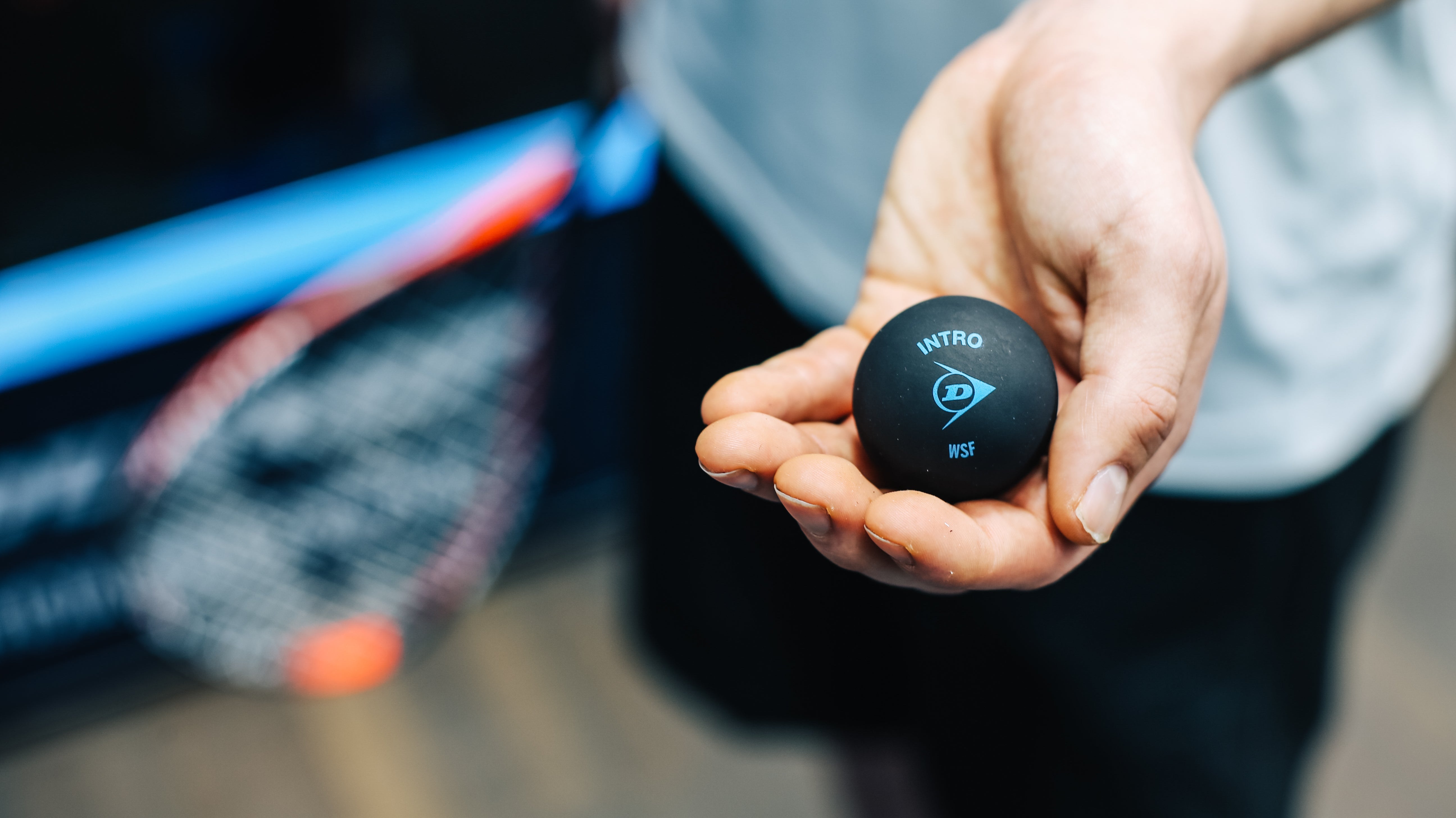
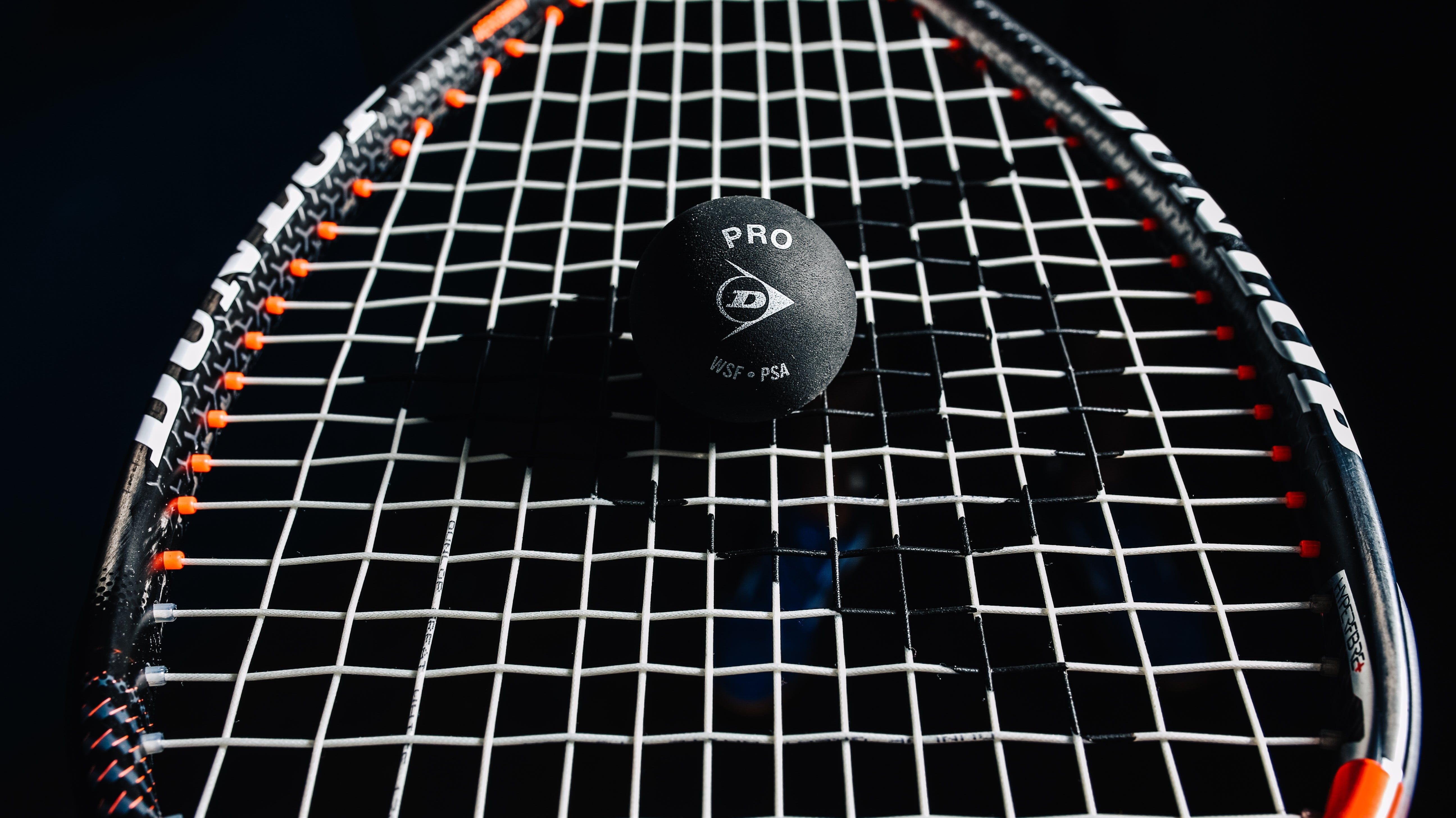
• A squash ball, which varies in bounce depending on your skill level (read our Guide To Squash Balls here)
• Indoor non-marking court shoes
• Comfortable, breathable sport clothing
For an in-depth guide to rackets, check out our Squash Racket Guide here
Why Play Squash?
Squash is a full-body workout, combining cardio, strength, agility, and mental sharpness. It’s also:
• Time-efficient (you can play a match in under 45 minutes)
• Social and community-driven
• Accessible for all ages and fitness levels
• Inexpensive compared to many racket sports
Is Squash Hard to Learn?
Like any sport, squash has a learning curve—but beginners can start having fun within a session or two. The key to success is regular practice and understanding the game’s flow. You’ll improve quickly by playing with slightly better players and getting familiar with tactics and movement.
Basic Rules of Squash
Understanding the fundamental rules is essential for beginners to the game:
• Service: The server must have at least one foot in the service box and hit the ball to the front wall above the service line, ensuring it lands in the opposite back quarter court.
• Rally: Players alternate hitting the ball against the front wall. The ball must remain within the court’s boundaries and can hit the side or back walls before reaching the front wall.
• Ball Bounce: The ball is allowed to bounce once on the floor before a player must return it.
To play squash, a player begins the rally by serving from one of two service boxes. The ball must strike the front wall above the service line and land in the opposite back quarter of the court. Once the serve is returned, play resumes with players hitting the ball in alternatively.
The ball can hit the side walls or the back wall before, or after, hitting the front wall. But each shot, or stroke, must hit the front wall prior to bouncing on the floor to be deemed a ‘good’ shot. The ball must stay within the outlined boundary lines.
The ball may only bounce once on the floor before it must be returned. If the ball bounces twice, the rally is over.
How to Score Points in Squash
Modern squash uses the Point-A-Rally Scoring system to 11 points, commonly abbreviated to PARS 11. Here’s how it works:
• Every rally counts — you win a point regardless of who served.
• A game is won by the first player to reach 11 points.
• If the score reaches 10–10, play continues until one player has a two-point lead (e.g. 12–10, 13–11).
• The standard match format is best of five games — first to win three games wins the match.
In casual matches, players may agree to different formats, but best of 5 to 11 is the universal standard.
How to Win a Point
You win a point in squash when:
• Your opponent fails to hit the ball before it bounces twice.
• They hit the ball out of court (hitting the out lines or hitting the tin).
• They obstruct your swing without clearing, resulting in a stroke.
• A stroke is awarded in your favour due to interference or safety concerns.
Understanding Lets, No Lets, and Strokes
If you’re getting started in squash or learning how to play squash, one of the trickiest areas to grasp is interference — and the decisions that come with it: lets, no lets, and strokes. These rulings can change the outcome of a rally, and understanding them will help you become a more confident and fair player.
Interference can occur during play, leading to specific rulings. In general, according to the rules of squash as per the WSO (World Squash Officiating) after completing a reasonable follow-through, a player must make every effort to clear, so that when the ball rebounds from the front wall the opponent has:
- a fair view of the ball on its rebound from the front wall
- unobstructed direct access to the ball
- the space to make a reasonable swing at the ball
- the freedom to strike the ball to any part of the front wall. Interference occurs when the player does not provide the opponent who is making every effort to look for, go to, and play the ball with all of these requirements.
If any of these aspects are not met, it will result in one of the following decisions:
• Let: A rally is replayed without awarding a point if interference is accidental, neither player is entirely at fault, and prevents a fair play.
• No Let: No replay is granted if the referee deems there was minimal or no interference.
• Stroke: A point is awarded to the obstructed player if the interference is significant and prevents a clear winning shot.
Unlike tennis or badminton, squash is played in a confined, shared space. Players often cross paths during a rally, and these rules exist to keep the game safe, fair, and flowing. If one player obstructs the other from reaching or playing the ball, a referee (or the players themselves in casual games) must decide whether a let, stroke, or no let should be awarded.
These decisions are made to ensure fair play and safety on the court.
Tips for Beginners: Dealing with Interference
• Always try to clear the ball — move away after your shot.
• If you’re blocked, stop immediately and ask for a let — especially if it feels unsafe.
• In casual games without referees, aim for fairness and talk openly with your opponent.
Interference is a natural part of squash — and learning how to handle it is key to playing better and safer. By understanding lets, no lets and strokes, you’ll gain confidence and fairness in every match.
For a more in-depth guide on the rules of squash, see of Rules Of Squash guide here
Playing Squash – On Court And Match Play
Matches typically begin with a warm-up, followed by a coin toss or racket spin to determine serve. The first to win three games (best of five) wins the match. Game flow is fast, and matches demand both physical resilience and tactical smarts.
A standard squash match involves:
• Warm-Up: Players typically warm up the ball and themselves for a few minutes before starting. After about 2–3 minutes, players switch sides to ensure both experience the same court conditions and hit on both the forehand and backhand side.
• Starting Play: The server is decided by a spin of the racquet. The player who wins the spin is the player who will serve for the first point of the match.
• Between Games: There is a 90-second break between games.
• Game Progression: Players compete to win each game by reaching 11 points first, with at least a two-point margin if tied at 10-10.
• Winning the Match: The first player to win three games out of five is declared the match winner.
Match Etiquette: What Beginners Need to Know
Squash is a sport with a strong tradition of sportsmanship. Here are a few key points to remember:
• Always clear the ball — give your opponent space to hit.
• Call your own lets — especially if safety is at risk
• Shake hands after the match — a small but meaningful gesture.
Tactical Fundamentals Of Squash
Once you’ve grasped the rules of squash and understand how to play squash, the next step is learning how to play smart. You don’t need to hit the ball harder or have perfect technique to win points. In squash, smart players often beat strong ones.
By using tactical positioning, consistent shot choices, and court awareness, beginners can quickly level up their game and enjoy more competitive rallies.
Some simple strategies that can enhance your squash performance are:
• Control the T: Aim to position yourself near the centre of the court, known as “The T” From this position you can most efficiently reach all corners of the court
• Keep The Ball Tight: A “tight” shot is one that runs close along the side wall, making it hard for your opponent to attack. Trying to keep the ball tight to the sides is a good principle to keep in mind.
• Vary Your Shots: Use a mix of straight drives, crosscourt shots, and drop shots to keep your opponent guessing.
• Watch Your Opponent: Squash is a game of reading your opponent.Watch their body language and anticipate shot direction. Spot weaknesses — are they slower to the front? Backhand struggling?
Joining A Squash Club
If you’re learning how to play squash or just getting started in squash, one of the best things you can do is join a local squash club. Whether you’re looking for casual games, coaching, or competitive league play, a club is the gateway to improving your game and meeting like-minded players.
We’ve put together a resource here to help you find out how to join a squash club in your area.
Lastly, enjoy the game!