



The history of squash can be traced back to ancient ball games played in Europe where men played by hitting a ball with either a closed fist – as in “fives” or “bunch of fingers” – or with some form of bat or racket.
One such precursor was “le paume”, a popular handball game in 12th-century France where players hit a ball against walls using their hands, which developed into Jeu de Paume, Real Tennis or Royal Tennis.
As time progressed, this game inspired the development of many further racquet-based sports.
In the early 19th century this obsession with rackets and balls spawned another variety of the sport in the unlikely birthplace of the Fleet Prison in London. The prisoners in “The Fleet”, mainly debtors, took their exercise by hitting a ball against walls, of which there were many, with rackets and so started the game of “Rackets”.
This early adaptation of ‘Rackets’ spread to schools across England, including the prestigious Harrow School, where squash as we know it today truly began.
Harrow School: The Birthplace Of Squash
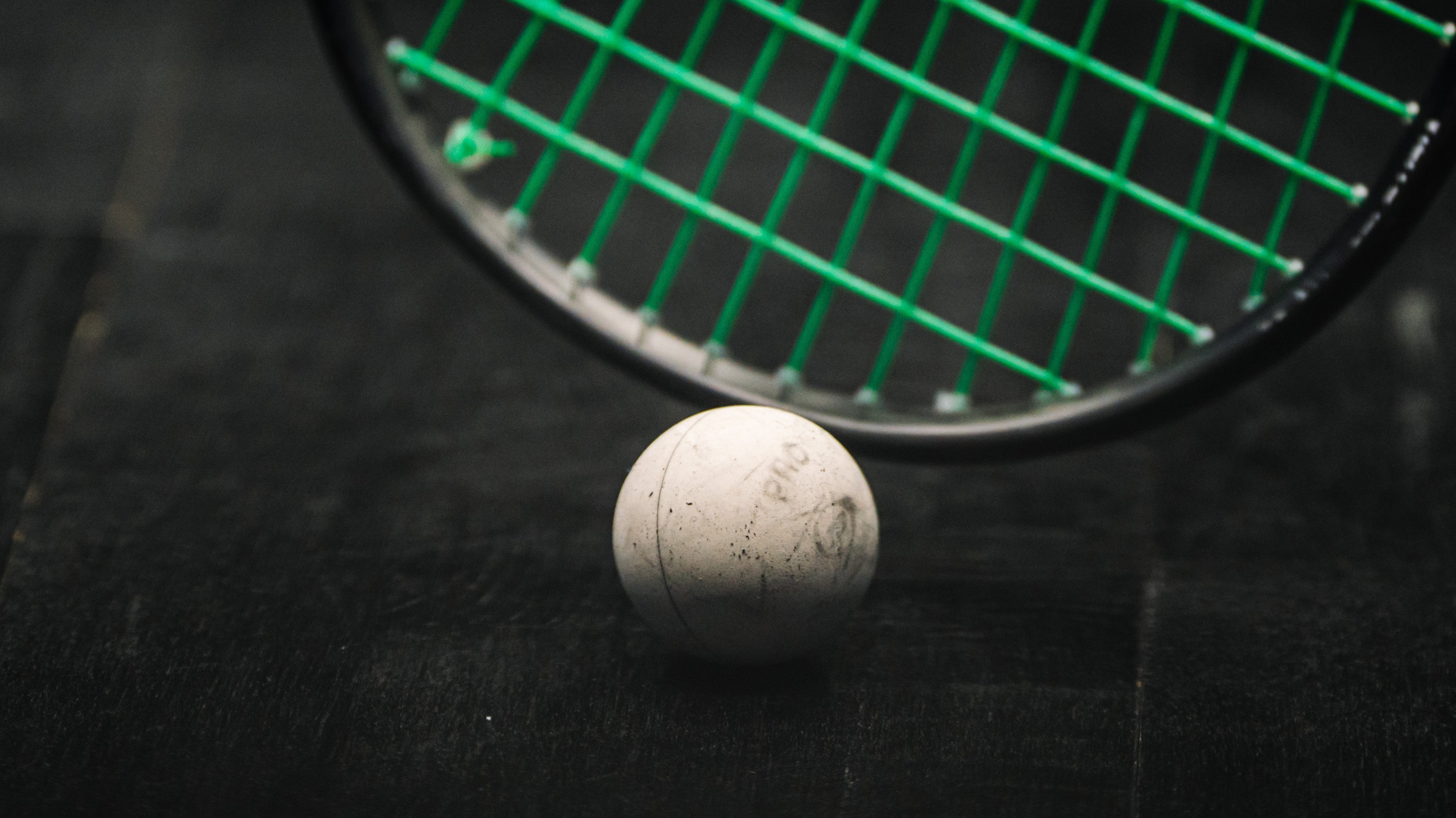
Squash is believed to have been invented at Harrow School around the 1830s when the pupils discovered that a punctured Rackets ball, which “squashed” on impact with the wall, produced a game with a greater variety of shots and required much more effort on the part of the players, who could not simply wait for the ball to bounce back to them as with Rackets.
This new version quickly gained popularity among the schoolboys, and in 1864 the first four Squash courts were constructed at the school and Squash was officially founded as a sport in its own right.
As Harrow students graduated and introduced squash to new regions, the sport’s appeal grew rapidly. By the late 19th century, squash courts were being constructed in schools, clubs, and private homes throughout England and beyond. Squash’s unique blend of speed, strategy, and physicality made it an instant hit in various parts of the British Empire, paving the way for its global expansion.
In those early days squash, as with all other sports, was without any form of international standardisation and it was inevitable that slight variations in the way it was played would occur.
Luckily only two main streams of activity followed, one in England with its 21 feet wide courts and “soft” ball – squash as we know it – and the other in North America, with its 18½ feet wide courts and “hard” ball – sometimes referred to as hardball squash.
A court built at the Bath Club in London at the beginning of the 20th century was chosen as the model for the standard size of a Squash court, 32 feet by 21 feet or 9.75 metres by 6.4 metres, much smaller that the court for Rackets which measures 60 feet by 30 feet (18.3 metres by 9.1 metres). The British dimensions were proposed in 1911, but not ratified until 1923.
The Rise of Competitive Squash: Establishing the Rules
The first recorded reference to “squash”, other than in Harrow school, appeared in 1890 in the English book “The Badminton Library of Sports and Pastimes” written by the Duke of Beaufort. Eustace Miles, a world champion at both Tennis and Rackets, wrote the first book on Squash in 1901; stating that the sport was enjoyed by thousands of players in various parts of the world.
By that time there were courts in schools and universities in England and some also in private houses.
By 1883, Harrow school had published the first set of squash rules, detailing scoring systems, gameplay guidelines, and court dimensions. These rules provided a framework that facilitated the sport’s organised growth.
As squash play developed so did its administrative structure. The first discrete national associations to be formed were the United States Squash Racquets Association in 1907 and the Canadian Squash Racquets Association in 1911. In England the game was regulated by a squash sub committee of the Tennis and Rackets Association from 1908 until it gained full status as the Squash Rackets Association in 1928.
The ‘SRA’ began overseeing national and international squash tournaments, solidifying the sport’s standing within the global sports community.
The first professional Squash Championship was held in 1920 in England, when C.R. Read (Queens Club) beat A.W.B. Johnson (RAC Club).
In 1923 H.A.L. Rudd, writing in “Baily’s Magazine”, forecast that Rackets would lose many players to Squash with the arrival of the first English Amateur Championships. He was concerned at this prospect as he considered Rackets to be a “manlier” game; Squash afforded a good “sweat” but did not demand the same skill as Rackets, in his opinion.
Rudd’s forecast proved to be only too correct as squash grew rapidly and soon left its parent sport far behind in popularity.
In its early days international Squash was controlled by the SRA and the United States Squash Rackets Association, but in 1966 representatives of the sport from Australia, Great Britain, India, New Zealand, Pakistan, South Africa, USA, Canada and the United Arab Republic met in London and agreed to form the International Squash Rackets Association (ISRF), the first meeting of which was held on 5 January 1967.
The ISRF continued to thrive and was amalgamated with the Women’s International Squash Federation in 1985.
In 1992 the name of the Federation was changed to the World Squash Federation (WSF), finally recognising that the sport had been universally referred to simply as “Squash”, rather than “Squash Rackets”, for most of its existence.
Squash’s Global Expansion: A Journey Across Continents and Cultures
The 20th century marked the worldwide spread of squash, largely due to British expatriates and military personnel who introduced the sport to various countries. Squash found a stronghold in Commonwealth countries like India, Pakistan, Egypt, and South Africa, where local players and unique playing styles began to emerge.
Egypt: The Rise of a Squash Powerhouse
Egypt’s squash legacy began in the early 1900s when British officials established courts in Cairo.
In 1933 the great Egyptian player F.D. Amr Bey, won the first of his five British Open Championships, then seen as the World Championships. He was followed in his achievement by M.A. Karim of Egypt who won the title four times from 1947 to 1950.
While there were few Egyptian champions between the 19060s – 1990s, the emergence of Ahmed Baroda and the staging of the tournament by the Pyramids led to a resurrection in squash in Egypt and since then, Egyptian players have dominated the global scene, with the likes of; Amr Shabana, Ramy Ashour, Ali Farag and Nour El Sherbini synonymous with squash excellence.
Squash in Pakistan: Home to Legendary Players
No history of squash can be complete without an account of the amazing exploits of the Khan dynasty of Pakistan, starting with Hashim who won the first of his seven British Open titles in 1951 at the age of 35 years.
Hashim was the first of a line of great Pakistani Squash Champions – Azam Khan, Mohibullah Khan, Roshan Khan, Aftab Jawaid, Gogi Alauddin, Mo Yasin, Qamar Zaman, Mohibullah Khan Junior, Hiddy Jahan and the two greatest players of the 1980s and 1990s – perhaps of all time – Jahangir Khan and Jansher Khan.
Jahangir dominated the sport for 14 years, winning the British Open 10 times and the World Open 8 times and was undefeated for 5½ years – with his reported 555 match winning streak one of the longest in all of sport’s history.
Jansher took over his mantle in 1989 with his first World Open title win and began a debate in the sport about which JK was the greatest of them all.
The Great McKay: Women and Australia
The Women’s British Open commenced even earlier than the Men’s; with Miss J.I. Cave winning the title in 1922. Until 1960 the title belonged solely to English players, with Janet Morgan (later Shardlow) winning 10 times between 1950 and 1958.
She was followed by the most famous female squash player ever, the Australian Heather McKay. After losing to English player Fran Marshall in 1962 during the Scottish Open, McKay vowed never to lose another match – and she kept try to her word. From that point on she dominated the sport from and remained undefeated throughout her playing career – winning an unprecedented 16 consecutive British Open titles and two World Open crowns.
At the age of 38 McKay retired from squash. McKay wrote a book, Heather McKay’s Complete Book of Squash, which was released in 1979. After her retirement she took up racquetball, in which she was also successful. As early as 1977, she won the US Amateur Racquetball Championship. In 1980, she won the Canadian Racquetball Championship, which she won again from 1982 to 1985. In 1980, 1981, and 1984, she won the US Professional Racquetball Championship.
Her successor as the leading female player was the New Zealander, Susan Devoy, who won the title 8 times between 1984 and 1992. Following her was a wave of Australians like five-time World Champion Sarah Fitz-Gerald, Michelle Martin, Vicki Cardwell and Rachael Grinham – part of the Australian era that dominated squash between the Pakistan-era of the 1980s to the current era of Egyptian domination.
Jonah And Geoff: Pioneers
Perhaps the players who had the most impact on the development of the sport were Jonah Barrington (Ireland) and Geoff Hunt (Australia). They dominated Squash between the late 1960’s and early 1980’s, capturing the imagination of sportsmen and women everywhere and starting the boom in the sport which raised the number of courts to 46,000 worldwide and the number of players to over 15 million by 1994.
From Wooden Rackets to High-Tech Gear
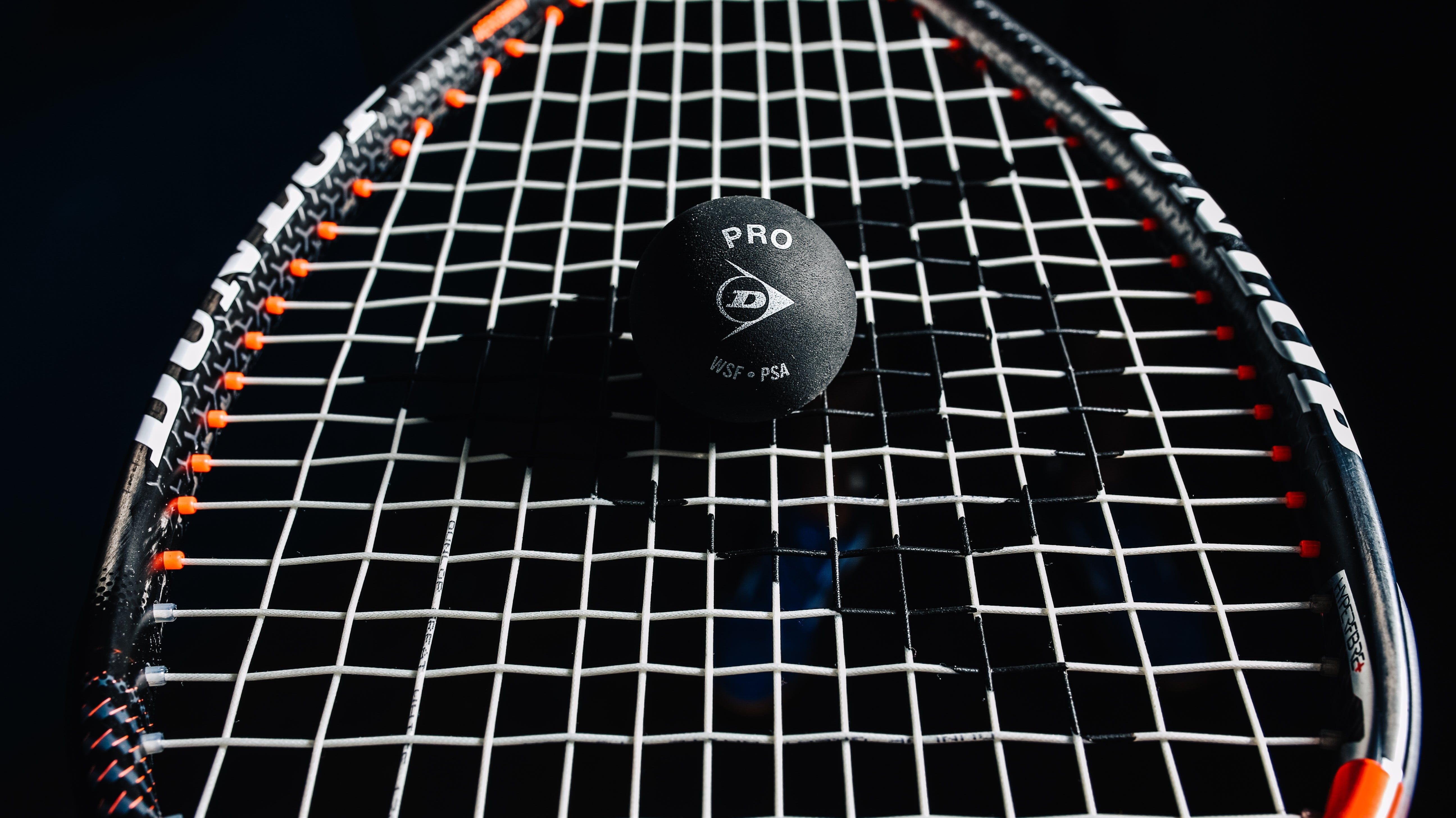
The evolution of squash equipment has played a significant role in shaping the sport. Early rackets were made of laminated timber with gut strings, making them heavy and less manoeuvrable. Advancements in material science have led to lightweight composite rackets made from graphite, carbon fibre, and titanium, enhancing control and power.
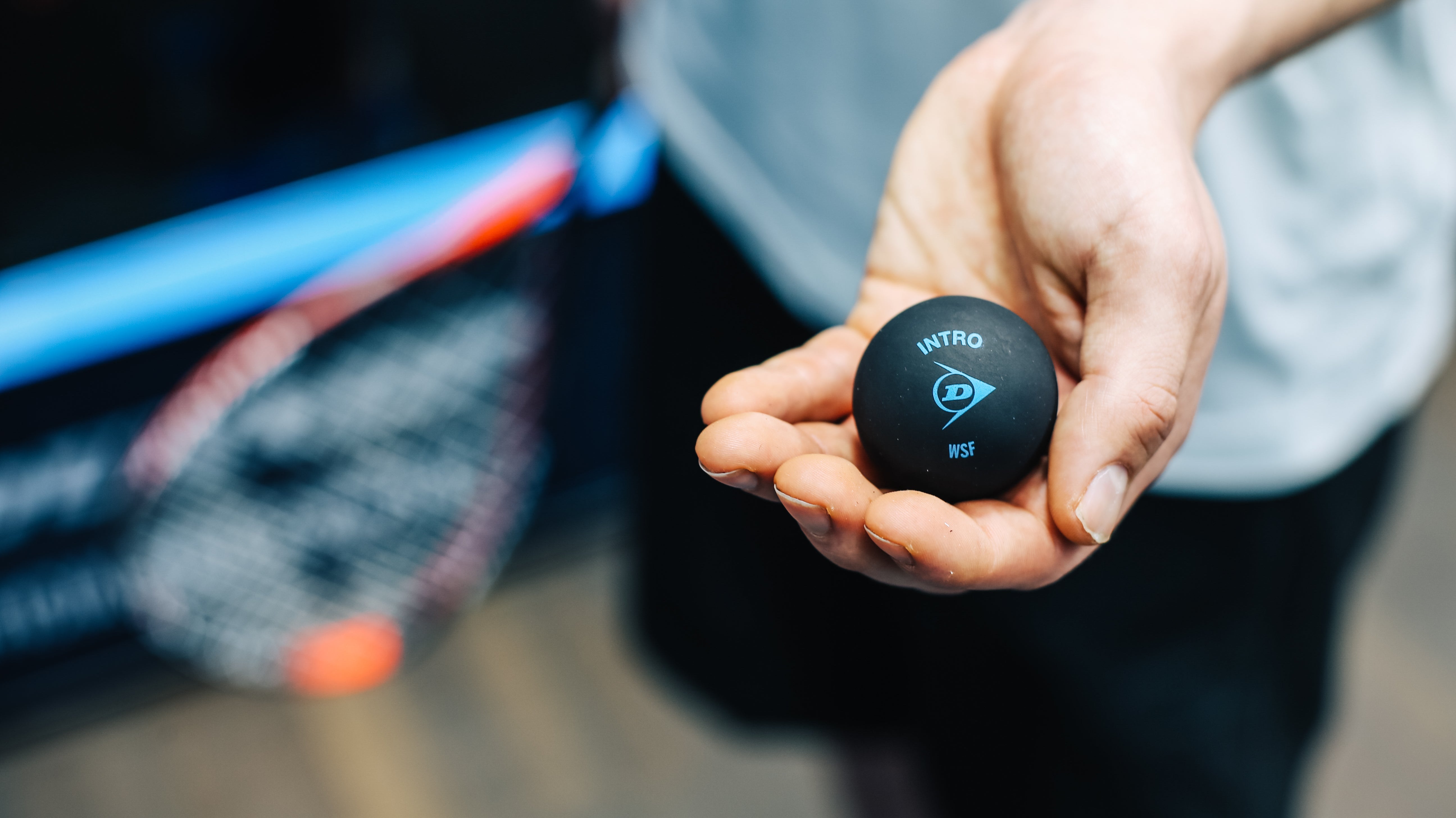
Squash balls have also undergone changes. Initially hard and fast, today’s squash balls are available in varying levels of bounce and speed. The introduction of the double yellow dot ball, now the standard for advanced play, has increased the sport’s complexity and appeal.
Squash in the Modern Era: Growth, Global Competitions, and Olympic Aspirations
The latter half of the 20th century saw the establishment of professional squash circuits, led by organisations such as the Professional Squash Association (PSA) and the World Squash Federation (WSF).
Prestigious tournaments like the World Championship and British Open have elevated squash’s status, attracting global talent and growing its fan base.
Following almost 30 years of campaigning vigorously for a spot, squash finally earned a place in the Olympic Games in October 2023 – with the sport set too make it’s Olympic debut at the Los Angeles Olympics in 2028.