


HEAD HEAVY, EVENLY BALANCED OR HEAD LIGHT? OPEN THROAT OR CLOSED THROAT? LIGHT WEIGHT OR HEAVY?
Those are just some of the questions that any wannabe purchaser faces when embarking on the quest to purchase a new squash racket.
Having the correct weapon in hand can make all the difference when it comes to crunch time on court, but even before you encounter any of the marketing jargon used by manufacturers to entice you to purchase their brand over their rivals, you must navigate a plethora of options, all of which can have a dramatic impact on your on court success.
With variations in shape, size, weight and materials, it is difficult for newcomers to the game, and even many seasoned players, to know which choices to make in order to equip themselves with the racket best suited to their game – so we’ve endeavoured to break down the science to help you make the right choice the next time it comes to choosing your new racket.


ARE YOU BALANCED?
A RACKET CAN BE ONE OF THREE THINGS WHEN IT COMES TO BALANCE: HEAD LIGHT, HEAD HEAVY OR EVEN BALANCED.
HEAD-LIGHT RACKET: as the name suggests, has its weight positioned toward the handle end of the racket. Head-light rackets tend to offer greater manoeuvrability – suited to players who like to play quick volleys and flick shots – but, because the weight is more in the hand, can be harder to control at speed. They are generally more suited for advanced players who are able to generate racket head speed and power through their swing mechanics.
HEAD-HEAVY RACKET: has its mass located toward the head of the racquet, meaning, in general, the racket is less manoeuvrable but offers more power and stability to the player. As the mass is more towards the head, the racket can be swung with greater momentum and, as a result, produce more power and weight of shot. However these rackets tend to feel clumsier in hand and are not ideal for quick volley styled play.
EVEN BALANCED RACKET – is, therefore, one with the mass distributed evenly across the whole racket, whilst offering neither power or touch in extremes. If you’re not sure what sort of balance you would prefer, this is a safe option.
*In general a head heavy racquet paired with a light racquet frame is a good starting point for beginners as this will be easy to swing yet assist the player in generating power.
A TICKLY THROAT
RACKETS COME IN ONE OF TWO SHAPES, OR THROAT STYLES, WHICH ARE: OPEN THROAT AND CLOSED THROAT.
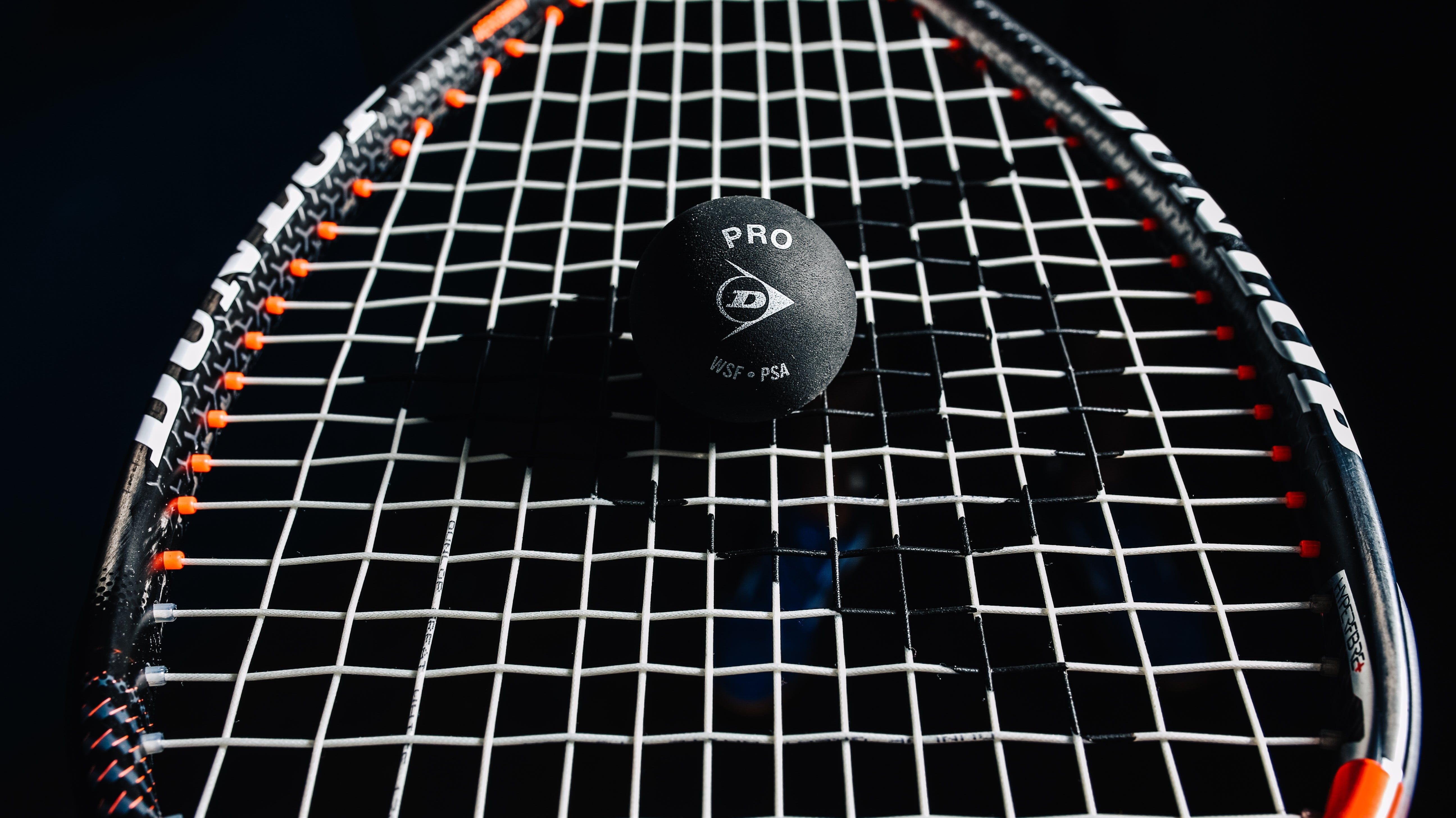
OPEN THROAT, OR TEARDROP: due to the shape, these rackets have a larger string-bed area and a larger sweet spot, therefore they tend to be more forgiving and offer the player more power. However this comes at the expense of control, some of which is sacrificed due to the large sweet spot and longer string bed.
CLOSED THROAT RACKETS: usually have more rounded heads and a smaller string-bed, and as a result, a smaller sweet spot. Due to the shape of the head, and the shorter string bed, closed throat rackets tend to offer greater control through the shot and therefore suit a more experienced player looking for enhanced control.


TIPPING THE SCALES
MOST SQUASH RACKETS WEIGH SOMEWHERE BETWEEN 110G THROUGH TO 190G, ALTHOUGH THERE ARE OPTIONS OUT THERE ON THE MARKET WHICH EXTEND THIS RANGE FROM AROUND 90G TO 240G.
Rackets weighing 140g plus tend to be classified as heavy as they provide increased power and more stability through impact. Heavy rackets are great for players who love to play a length based game, using their power to try and pin the opponent in the back corners. Due to the increased weight however these rackets are not best suited to players who like to play a lot on the volley.
Mid-weight rackets are normally around the 120g to 140g mark. Rackets around these weights tend to be well balanced for achieving the control and touch associated with light weight rackets and the power of heavier rackets.
Rackets weighing 120g and under are classified as light-weight and are often preferred by players who frequently play touch shots, as they provide more feel and allow for quick wrist movement, quicker racket head movement and aid in deception in front of the court. They are also suited to players who volley and take the ball early, as they can be manoeuvred slightly quicker than heavier rackets.
*Remember that the weight advertised does not always mean the final playing weight of a racket. Many manufacturers list the frame weight only – not the total playing weight once strings, grommets and grips have been added.


GET YOUR HEAD DOWN
AS WELL AS HAVING DIFFERENT WEIGHTS AND SHAPES, RACKET HEADS CAN ALSO HAVE DIFFERENT SIZES. SQUASH REGULATIONS STATE THAT NO RACKET HEAD CAN EXCEED 500CM2, WHILST THE SMALLEST RACKETS ON THE MARKET TEND TO BE AROUND THE 460CM2 MARK.
460cm2
Smaller head sizes tend to have smaller sweet spots, therefore any off-centre shots will be more noticeable and the racket less forgiving. These rackets though do provide slightly more touch and accuracy, attractive to more advanced and experienced players, who can generate sufficient power and consistently hit the ball in the middle of the strings.
500cm2
Larger head sizes provide a larger sweet spot, which means you have more margin for error if you don’t hit the ball in the middle of the strings regularly. It will also generate more power in your shots because of greater trampolining effect – a larger head size means longer strings and therefore more spring in them when you connect with the ball.